Panch Prayag, Uttarakhand
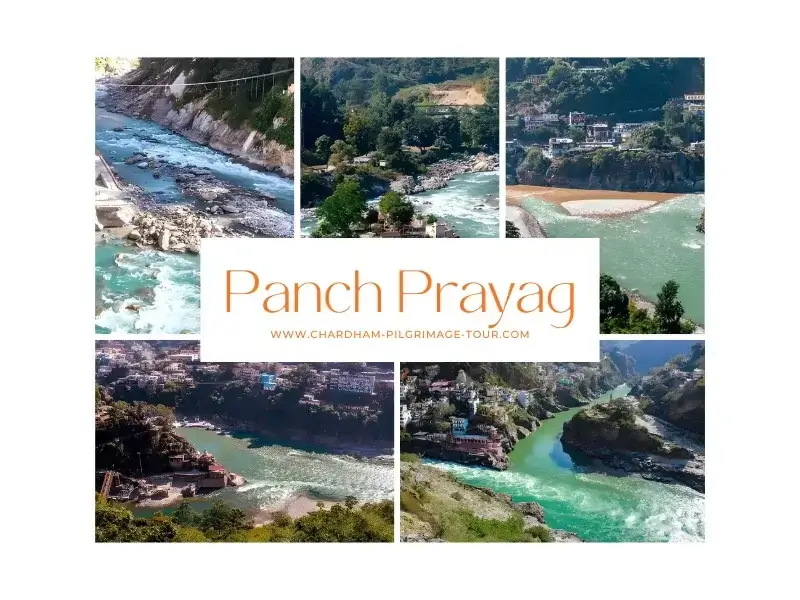
Panch Prayag Uttarakhand - Complete Travel Guide to the Five Sacred River Confluences.
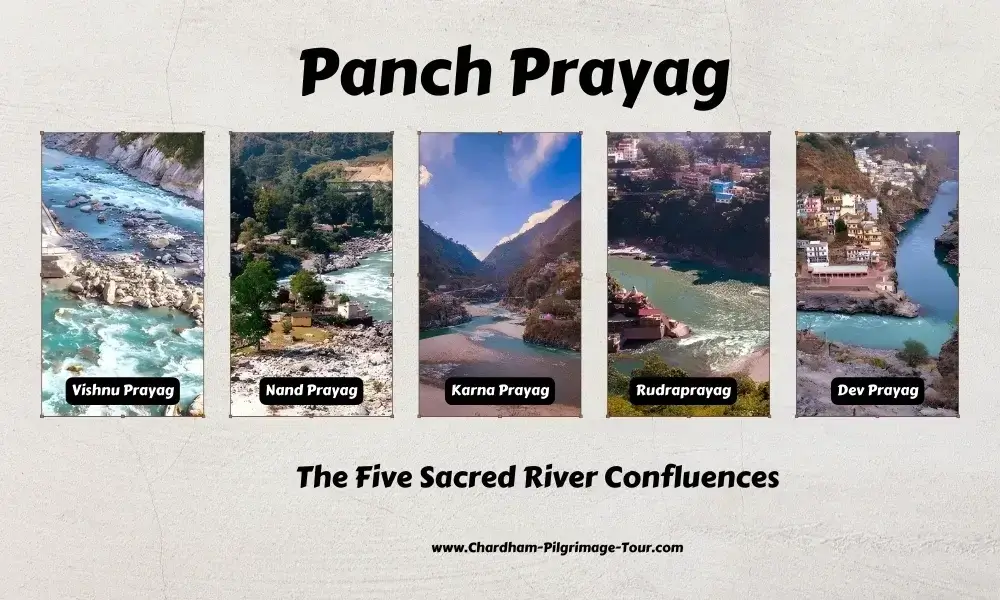
Deep in the Garhwal Himalayas of Uttarakhand lies one of the most spiritually powerful pilgrimage circuits in India, the Panch Prayag. “Panch” means five, and “Prayag” means confluence. Together, Panch Prayag refers to the five sacred river confluences along the Alaknanda River where major Himalayan rivers merge before ultimately forming the holy Ganga at Devprayag.
For pilgrims on the Chardham Yatra route, these confluences are not roadside stops. They are spiritual gateways. Each prayag deepens the journey before the pilgrim ascends toward Badrinath or Kedarnath.
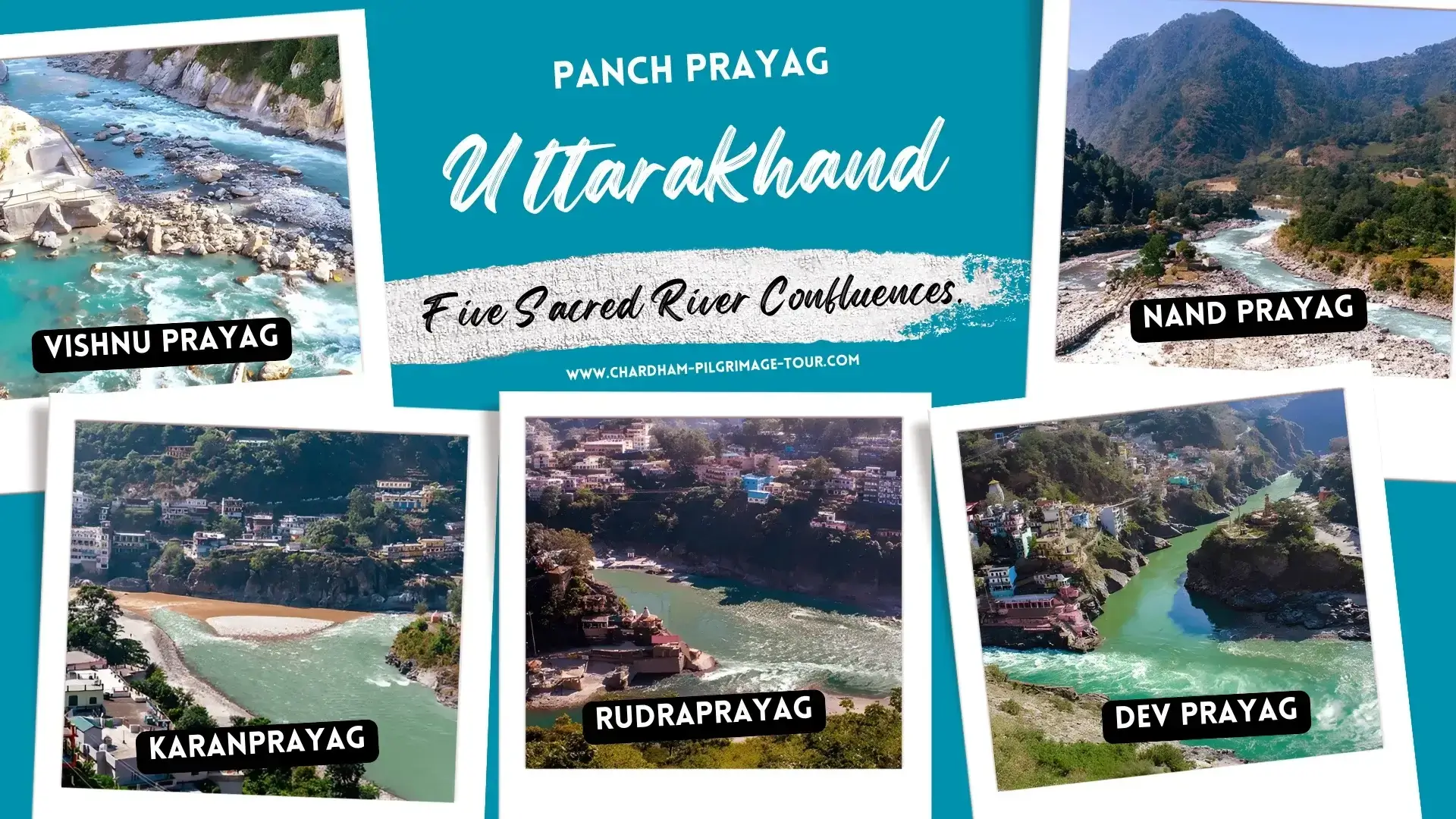
The five sacred confluences of Panch Prayag are :
- Vishnuprayag
- Nandprayag
- Karnaprayag
- Rudraprayag
- Devprayag
Together, they form the spiritual backbone of Garhwal’s sacred geography.
Panch Prayag - At a Glance
| Prayag | Rivers Converging | Altitude | District | Spiritual Association |
|---|---|---|---|---|
| Vishnuprayag | Dhauliganga + Alaknanda | 1,372 m | Chamoli | Lord Vishnu |
| Nandprayag | Nandakini + Alaknanda | 914 m | Chamoli | King Nanda / Krishna |
| Karnaprayag | Pindar + Alaknanda | 788 m | Chamoli | Karna (Mahabharata) |
| Rudraprayag | Mandakini + Alaknanda | 610 m | Rudraprayag | Lord Shiva (Rudra) |
| Devprayag | Bhagirathi + Alaknanda | 830 m | Tehri Garhwal | Birthplace of Ganga |
Note : The Panch Prayag Yatra is most logically undertaken in ascending order from Devprayag to Vishnuprayag.
1. Vishnuprayag - The Highest Confluence
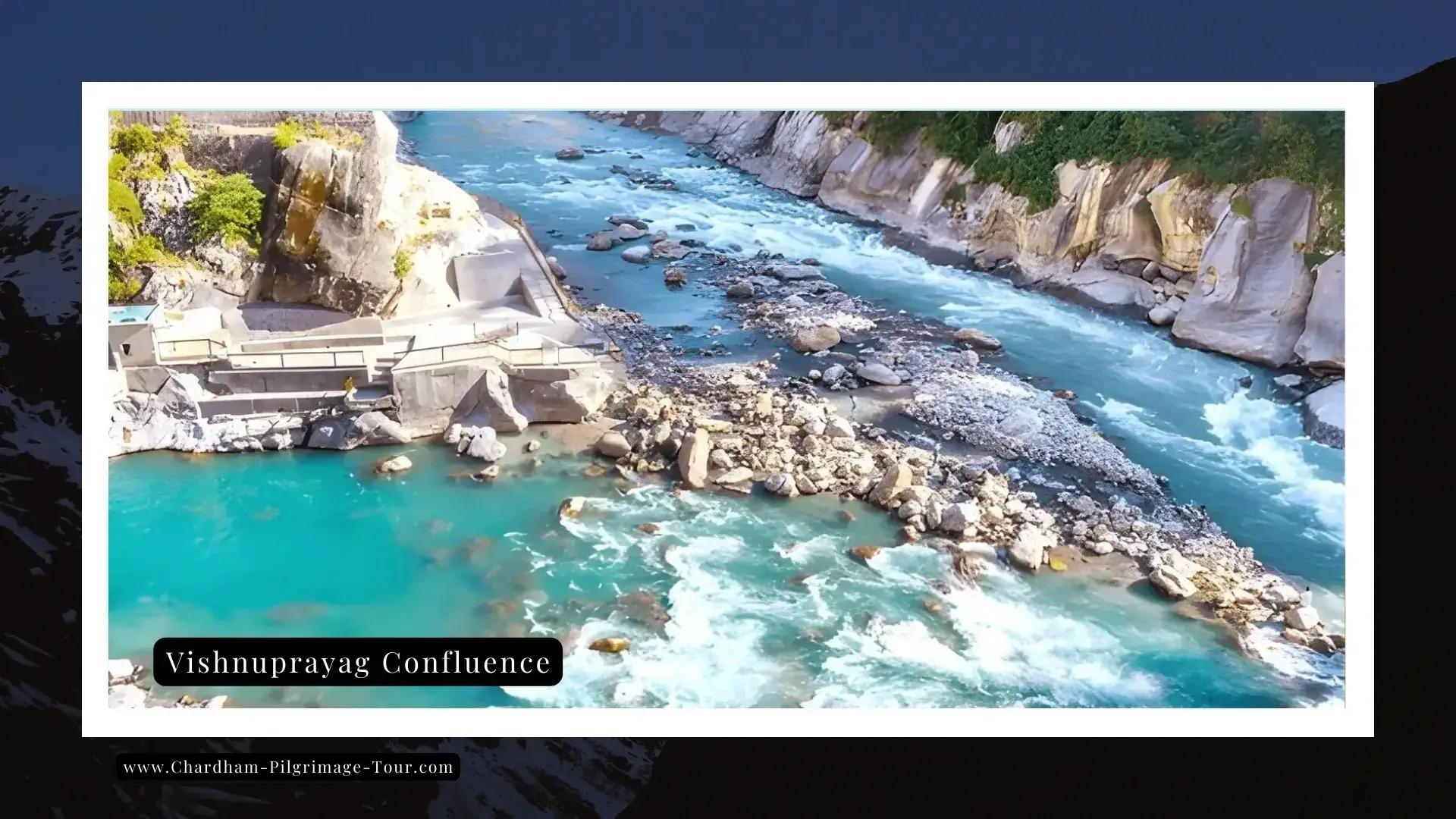
Located about 12 km before Joshimath on the Badrinath highway, Vishnuprayag is the highest and most dramatic of the five confluences. Here, the icy Dhauliganga River merges with the Alaknanda.
According to legend, Sage Narada performed intense penance at this confluence to seek blessings from Lord Vishnu. The small Vishnu Temple near the ghat commemorates this divine encounter.
What Makes Vishnuprayag Unique?
- Narrow rocky gorge setting
- Powerful glacial river currents
- Suspension bridge access
- Gateway to Badrinath
The confluence here feels raw and untamed, reflecting its high-altitude origin.
Travellers heading toward Badrinath Temple often pause here for blessings before ascending further.
Insight :
- Vishnuprayag (Fire) : Represents power, determination, and inner transformation.
- Don't just look at the water. Visit the Vishnu Kund (pool). Seek the specific spot where Sage Narada performed penance to appease Lord Vishnu. The 1889 octagonal temple here was commissioned by Maharani Ahilyabai Holkar.
2. Nandprayag - The Quiet Confluence
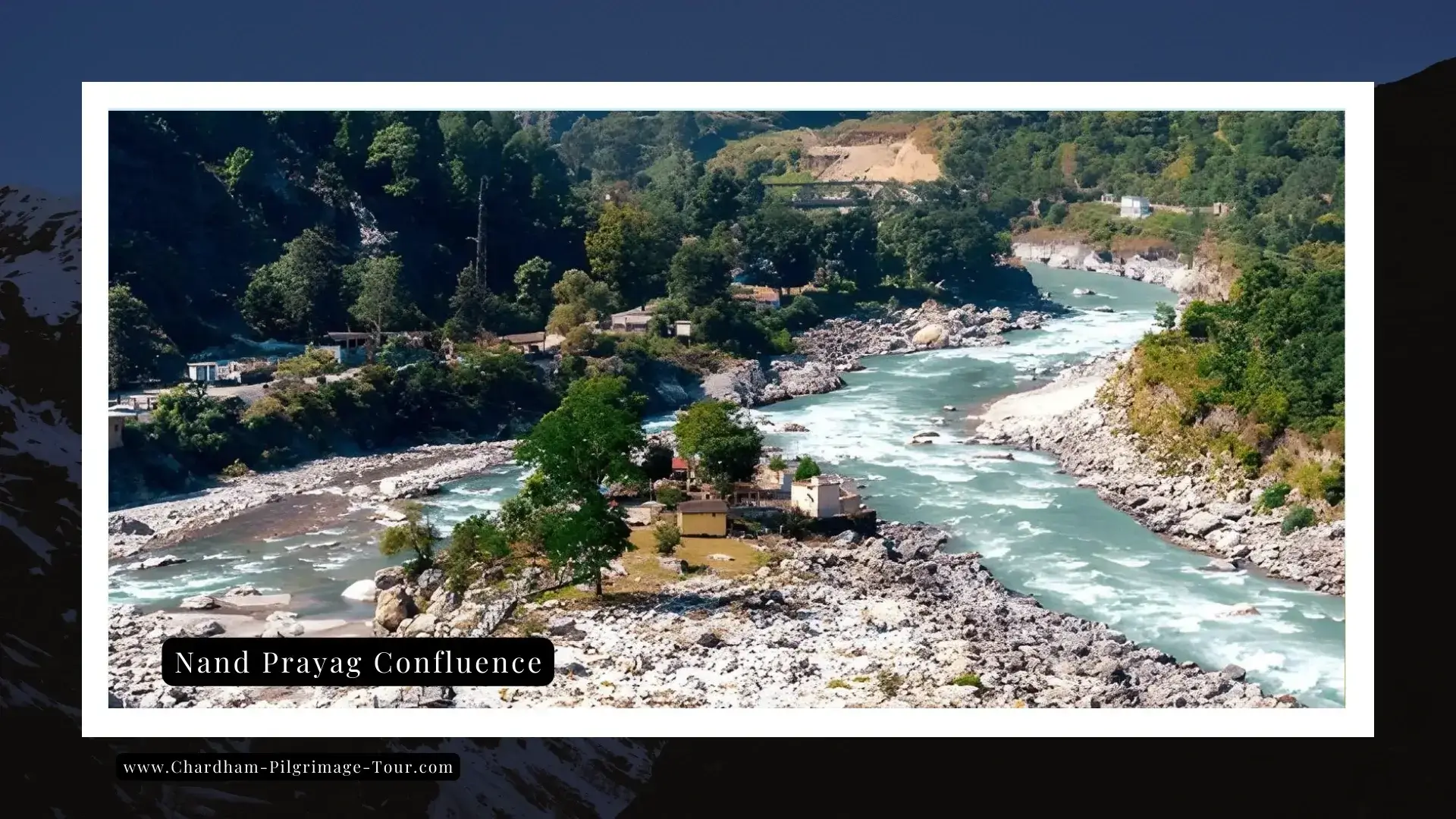
Situated about 21 km from Chamoli town, Nandprayag marks the meeting of the Nandakini River with the Alaknanda. At just over 900 metres altitude, Nandprayag is calmer and less commercial than other confluences.
Mythological associations connect this site to :
- King Nanda
- Lord Krishna’s foster father
- Vaishnava traditions
A small Gopalji Temple stands near the confluence.
Why Spend Time Here?
Many pilgrims rush past Nandprayag. That is a mistake. The quiet ghats and gentle merging of waters make this one of the most contemplative prayags.
Insight : Nandprayag (Water): Symbolizes calmness, compassion, and emotional clarity.
3. Karnaprayag - The Mahabharata Confluence
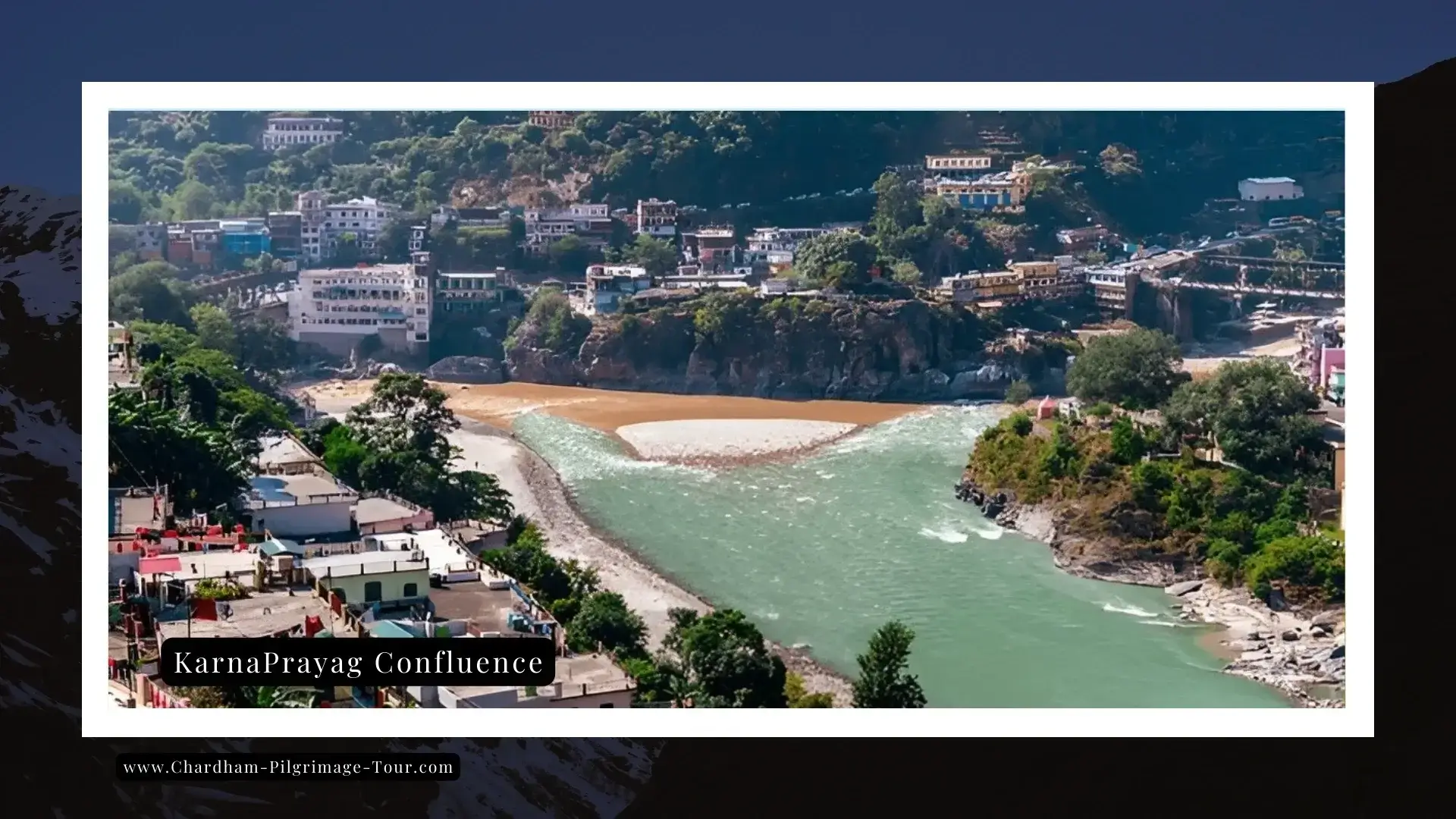
Karnaprayag is where the Pindar River meets the Alaknanda. This confluence is associated with Karna, the legendary warrior from the Mahabharata. Tradition holds that Karna performed penance here, worshipping the Sun God. A Karna Temple near the confluence honours this connection.
Karnaprayag also serves as the gateway to :
- Adi Badri
- Panch Badri circuit
Practical Importance
Karnaprayag is a significant junction town with :
- Accommodation
- Banking facilities
- Transport connections
For pilgrims combining Panch Prayag with Panch Badri, this is a strategic halt.
Insight : Karnaprayag (Earth): Represents grounding and a strong foundation in values.
4. Rudraprayag - The Confluence of Shiva
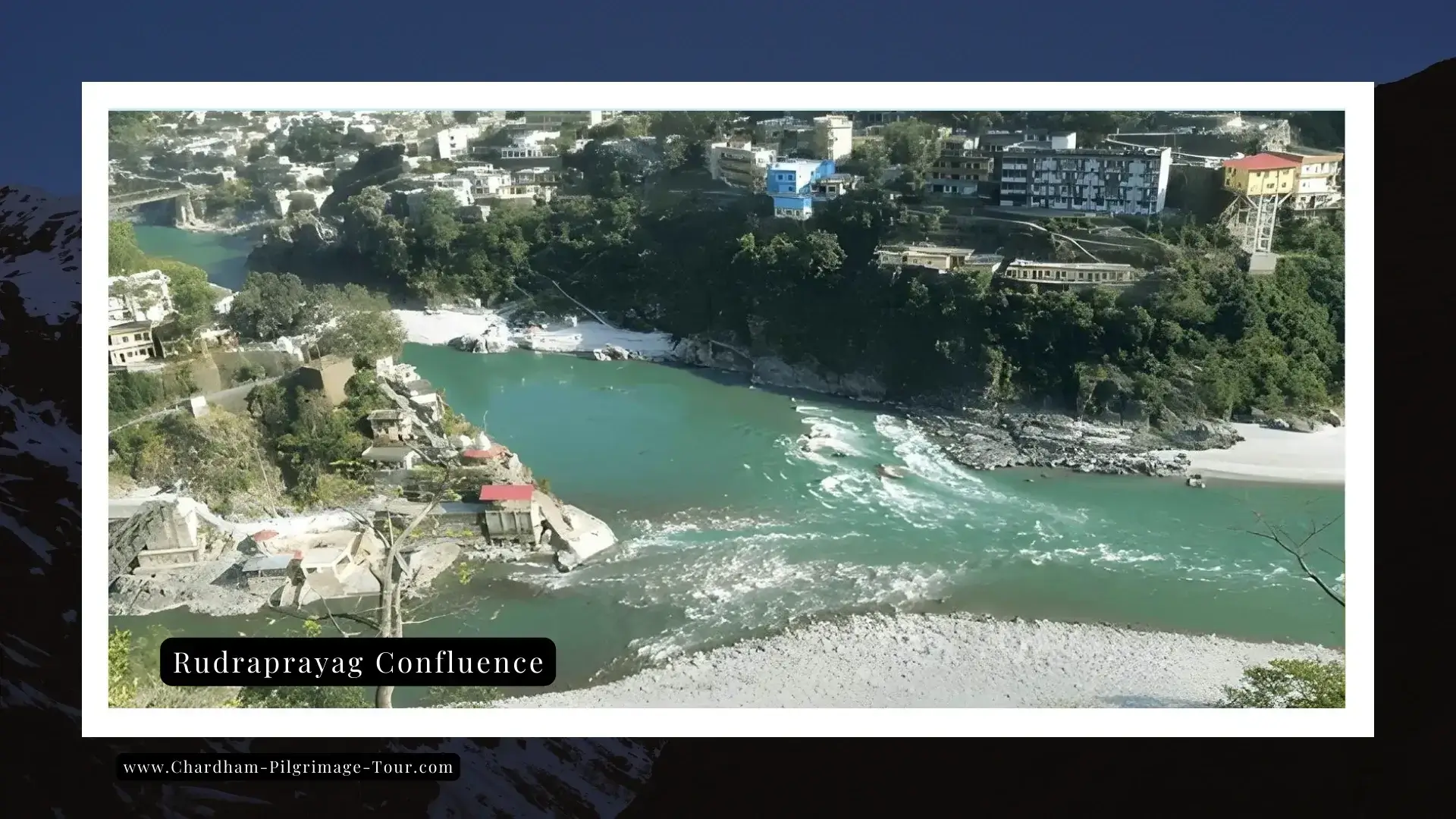
At Rudraprayag, the Mandakini River from Kedarnath merges with the Alaknanda. Every pilgrim heading to Kedarnath Temple and Badrinath passes through Rudraprayag. The site is named after Lord Rudra (a fierce form of Shiva). According to tradition, Shiva played the veena here after deep meditation.
Spiritual & Historical Layers
- Rudranath Temple
- Chamunda Devi Temple
- Connection to Jim Corbett’s famous leopard story
Rudraprayag is also one of the Panch Prayag towns with the best infrastructure, making it an ideal overnight base.
Insight : Rudraprayag (Air): Signifies constant change, rhythm, and growth.
5. Devprayag - The Birthplace of the Ganga
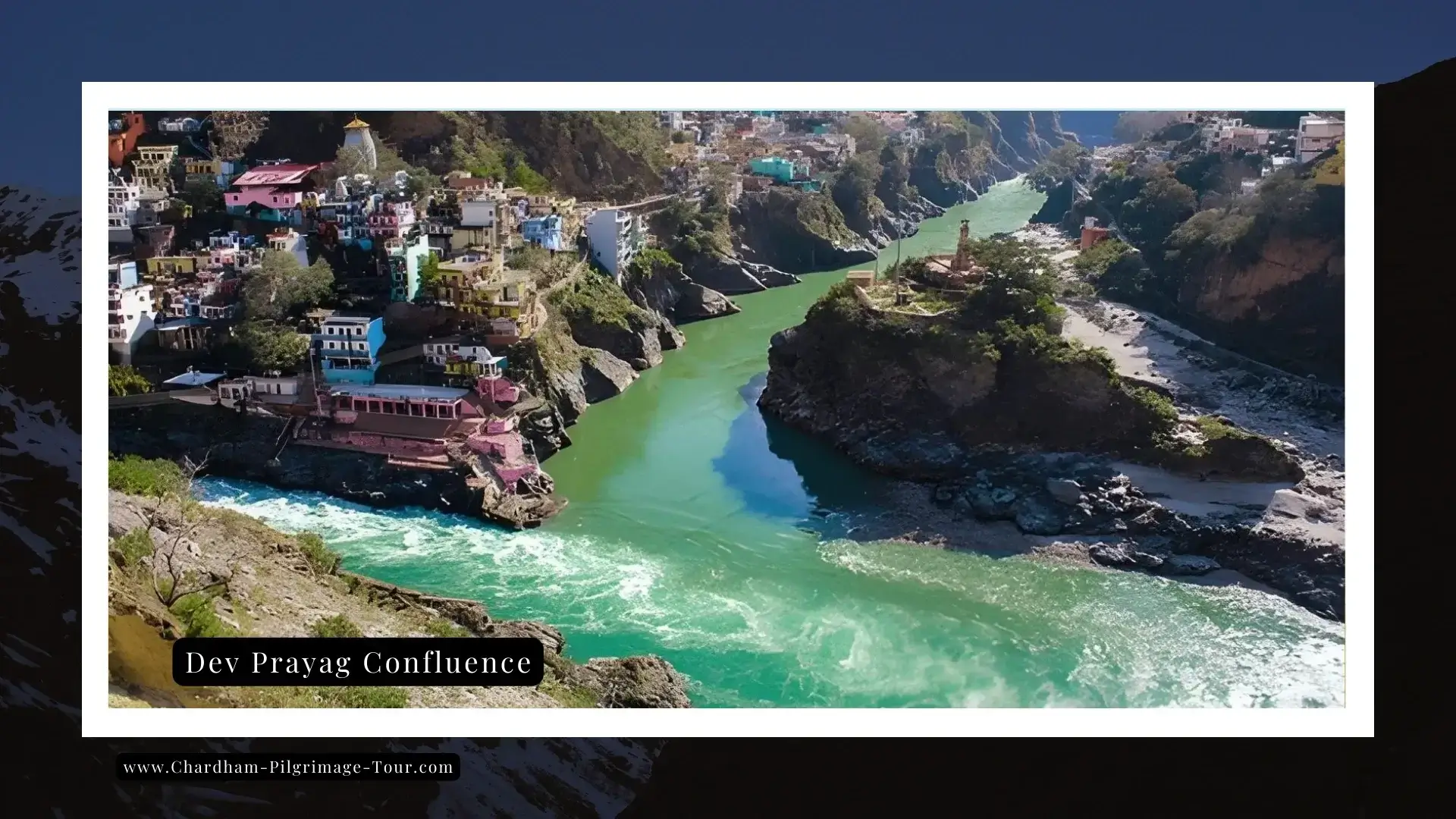
Devprayag is the most sacred and visually striking of all five confluences. Here, the Bhagirathi River (from Gangotri) meets the Alaknanda. From this exact point, the combined river is officially known as the Ganga.
The two rivers are distinctly visible :
- Bhagirathi: darker, silt-laden
- Alaknanda: clearer, blue-green
Watching them merge is one of Uttarakhand’s most powerful natural sights.
Highlights
- Raghunath Temple, Devprayag
- One of the 108 Divya Desams
- Associated with Lord Rama’s penance
Devprayag is not just the final prayag. It is a complete pilgrimage destination in its own right.
Insight :
- Devprayag (Space): Represents openness, unity, and ultimate inner peace.
- To reach the Raghunath Temple, you must climb 108 steep steps, each symbolising a step inward toward the self. This temple is one of the 108 Divya Desams (sacred Vishnu shrines) and is the only place where the Alaknanda's and Bhagirathi's colours (green vs. blue) are perfectly distinct before merging.
Panch Prayag Yatra Route
The most logical and spiritually sequential route for a Panch Prayag Yatra follows the Alaknanda upstream from Devprayag to Vishnuprayag, visiting the confluences in reverse geographical order as you ascend into the Himalayas. This is the natural direction of travel for pilgrims on the Chardham Yatra heading toward Badrinath.
The recommended Panch Prayag route for dedicated yatra pilgrims is as follows: begin at Devprayag from Rishikesh or Haridwar, proceed to Rudraprayag, then Karnaprayag, followed by Nandprayag, and finally Vishnuprayag near Joshimath before continuing to Badrinath. This sequence covers the full circuit of the Panch Prayag in an ascending order of altitude, mirroring the spiritual ascent of the Chardham pilgrimage itself.
Recommended Order : Rishikesh → Devprayag → Rudraprayag → Karnaprayag → Nandprayag → Vishnuprayag
Suggested 3-4 Day Panch Prayag Itinerary
Day 01 : Rishikesh → Devprayag → Rudraprayag (Overnight)
Day 02 : Rudraprayag → Karnaprayag → Nandprayag (Overnight Chamoli)
Day 03 : Chamoli → Vishnuprayag → Joshimath → Return or continue to Badrinath
For those combining with Chardham, Panch Badri, or Panch Kedar circuits, a structured itinerary reduces backtracking and travel fatigue.
Best Time to Visit Panch Prayag
Summer (April-June)
- Peak Chardham season
- Strong river flow
- Pleasant weather
Monsoon (July-September)
- Dramatic river volume
- Landslide risk
- Flexible schedules recommended
Autumn (October-November)
- Clear skies
- Stable river levels
- Fewer crowds
Winter (December-March)
- Lower-altitude prayags fully accessible
- Vishnuprayag occasionally affected by snowfall
- Most peaceful experience
Insight : Many experienced travellers consider October the ideal month.
How to Reach Panch Prayag?
By Air :
Nearest airport: Jolly Grant Airport
Distance to Devprayag: ~100 km
By Train :
Nearest railway stations :
- Haridwar
- Rishikesh
Total circuit from Rishikesh to Vishnuprayag: ~290 km.
By Road
All five confluences lie directly along the Rishikesh-Badrinath National Highway.
Transport options:
- State buses
- Private taxis
- Self-drive vehicles
Road conditions are generally good during open season.
Panch Prayag and Major Pilgrimage Circuits
The Panch Prayag integrate seamlessly with :
| Circuit | Can Be Combined? | Notes |
|---|---|---|
| Chardham Yatra | Yes | 4 major Himalayan shrines |
| Panch Badri | Yes | Via Karnaprayag |
| Panch Kedar | Yes | Via Rudraprayag & Ukhimath |
| Shakti Circuit | Yes | Via Devprayag & Rudraprayag |
Insight : Thoughtful planning can combine these into a 10-14-day Garhwal pilgrimage.
Essential Travel Tips for Panch Prayag Yatra
- Rudraprayag and Devprayag are major QR-code monitoring zones. Expect a 10-15-minute delay during peak months (May/June) as police scan Tourist Care Uttarakhand QR codes to manage the intake of pilgrims heading toward Badrinath and Kedarnath.
- At Karnaprayag, do not park on the main bridge. Use the designated GMVN parking area; it is a 5-minute walk but avoids the heavy traffic congestion common at this sub-divisional headquarters.
- Spend 30-60 minutes at each confluence
- Descend to the ghats safely
- Consider ritual bathing if comfortable
- Visit Devprayag at sunrise
- Carry sufficient cash
- Avoid rushing through the circuit
Travellers frequently treat Panch Prayag as a photo stop. They are not. Each confluence represents a shift in river identity and sacred energy.
Why Panch Prayag is the Soul of the Chardham Yatra
Before the pilgrim reaches Badrinath, before standing at Kedarnath, before seeking liberation at the high Himalayan dhams, the rivers themselves must first merge.
The Panch Prayag represent that merging.
- At Vishnuprayag, the mountain intensity begins.
- At Nandprayag and Karnaprayag, epic memory deepens.
- At Rudraprayag, Shiva’s presence intensifies.
- At Devprayag, the Ganga is born.
These confluences are not interruptions to the pilgrimage. They are the pilgrimage.
For travellers planning Chardham, Panch Badri, Panch Kedar, or broader Garhwal spiritual circuits, incorporating the Panch Prayag Yatra transforms the journey from a destination checklist into a layered sacred experience. Stand where rivers meet, watch waters become one and understand why the Himalayas are not merely mountains but living scripture.
Panch Prayag FAQs
There are five prayags in Uttarakhand, collectively known as Panch Prayag.
Devprayag is the most important prayag where the sacred Ganga River is formed.
Technically yes, but it would be very rushed. A 2–3 day trip is recommended to explore all five prayags comfortably.
Panch Prayag is not officially part of the Chardham Yatra, but it lies along the route to Badrinath and is often visited by pilgrims.
Rudraprayag is the closest prayag to Kedarnath.
Yes, winter travel is possible especially to Devprayag, Rudraprayag, and Karnaprayag as roads usually remain open.
Popular Tours
Book The Tour
Char Dham Temples
Hotels in Chardham Circuit
Char Dham Tour Packages
- Char Dham Yatra From Delhi
- Chardham Yatra From Mumbai
- Char Dham Yatra From Ahmedabad
- Chardham Tour with Hemkund Sahib
- Chardham Yatra by Helicopter
- Char Dham Yatra with Vaishno Devi & Amritsar
- Chardham Tour with Gomukh Trek
- Char Dham Packages From Bangalore
- Chardham Yatra From Chandigarh
- Char Dham Yatra with Auli
- Char Dham Yatra From Hyderabad
- Char Dham Yatra with Vaishno Devi, Jwalaji & Amritsar
- Char Dham Yatra From Chennai
- Chardham Packages From Bhopal
- Char Dham Yatra by Luxury Vehicle
- Char Dham Yatra with Satopanth Lake
- Char Dham Yatra with Panch Badri Tour
- Char Dham with Valley of Flowers
- Chardham Yatra with Mahavatar Baba and Nainital Tour
Do Dham Yatra
- Badrinath Kedarnath Yatra From Haridwar
- Badrinath Kedarnath Yatra
- Gangotri Yamunotri Yatra
- Gangotri Yamunotri Yatra from Haridwar
- Kedarnath Badrinath Yatra with Hemkund Sahib
- Kedarnath Badrinath Yatra with Valley of Flowers
- Kedarnath, Badrinathdham With Lake Of Nainital
- Yamunotri, Gangotri with Lake of Nainital
Ek Dham Yatra
- Badrinath Pilgrimage Tour
- Kedarnath Pilgrimage Tour
- Gangotri Pilgrimage Tour
- Yamunotri Pilgrimage Tour
- Kedarnath Yatra By Helicopter
- Badrinath Dham Yatra from Haridwar
- Badrinath Yatra with Hemkund Sahib
- Badrinath Yatra with Valley of Flowers
- Gangotri Dham Yatra with Gaumukh
- Kedarnath Dham Vasuki Tal Trek
