Kartik Swami Temple - Complete Travel Guide
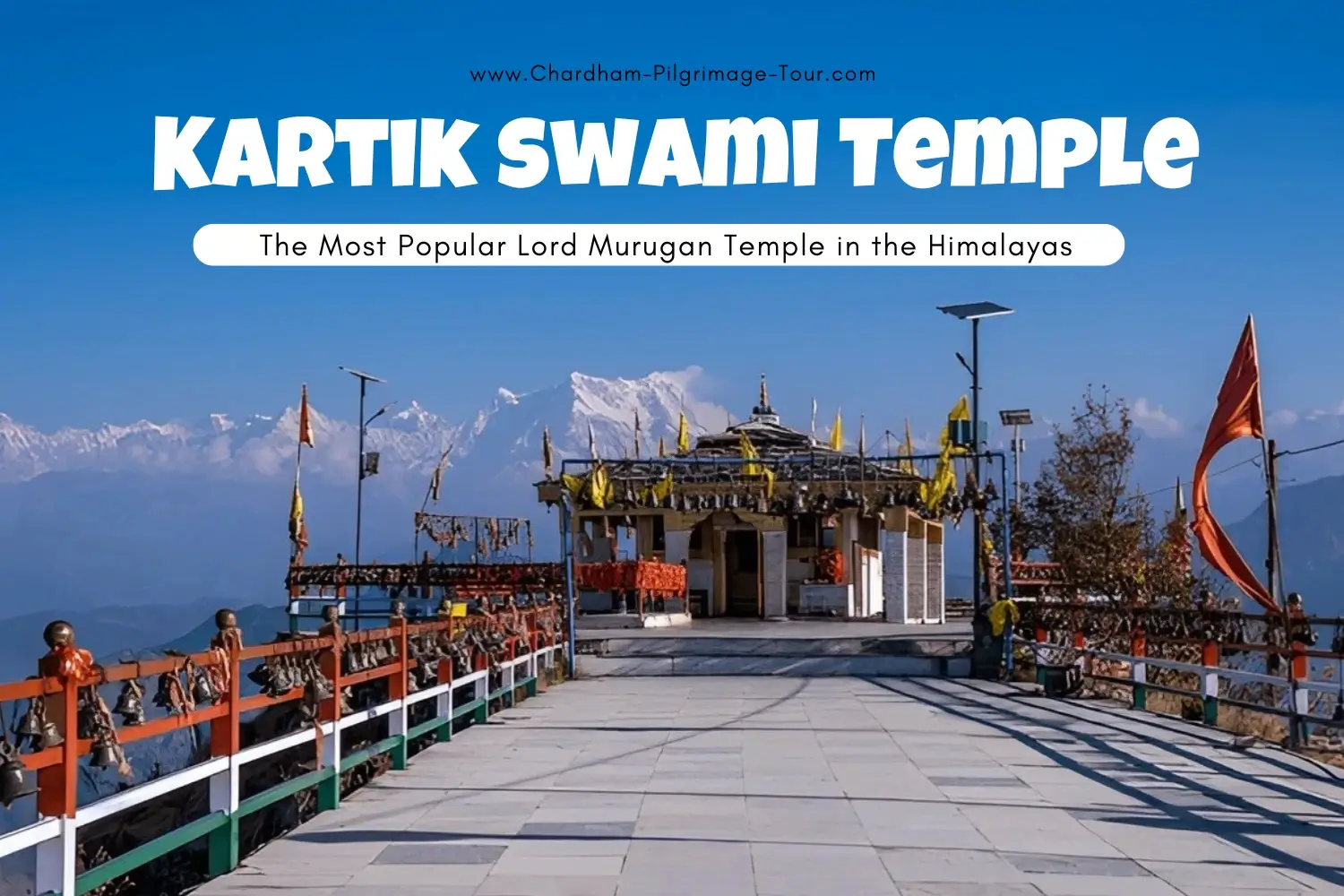
Situated dramatically at 3,048 metres above sea level in the Rudraprayag district of Uttarakhand, Kartik Swami Temple is one of the most breathtakingly located shrines in the Garhwal Himalayas. Dedicated to Lord Kartikeya, also known as Kartik Swami, Skanda, Murugan, or Subrahmanya, this hilltop temple combines mythology, trekking, and panoramic Himalayan grandeur in a way few pilgrimage sites in Uttarakhand can.
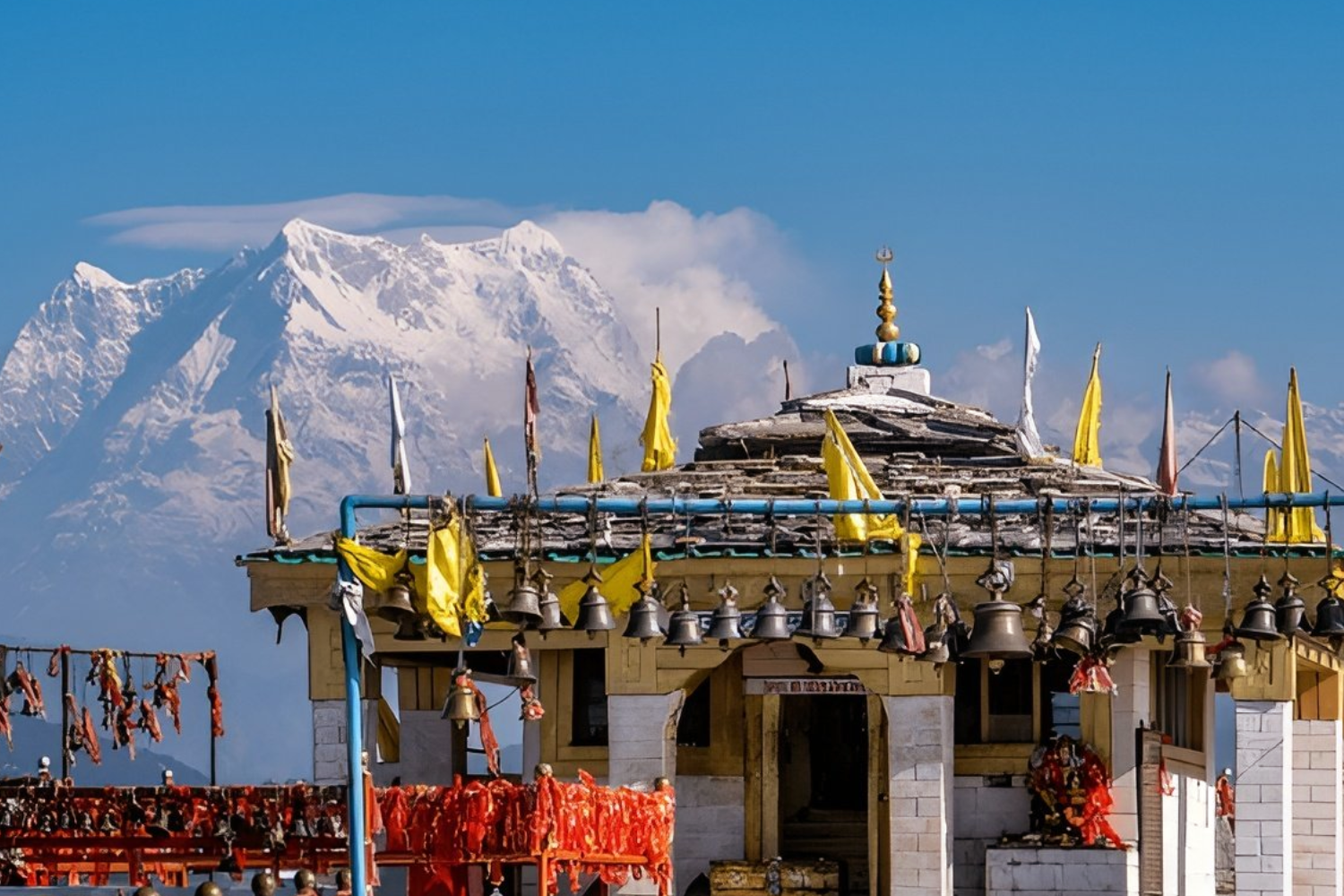
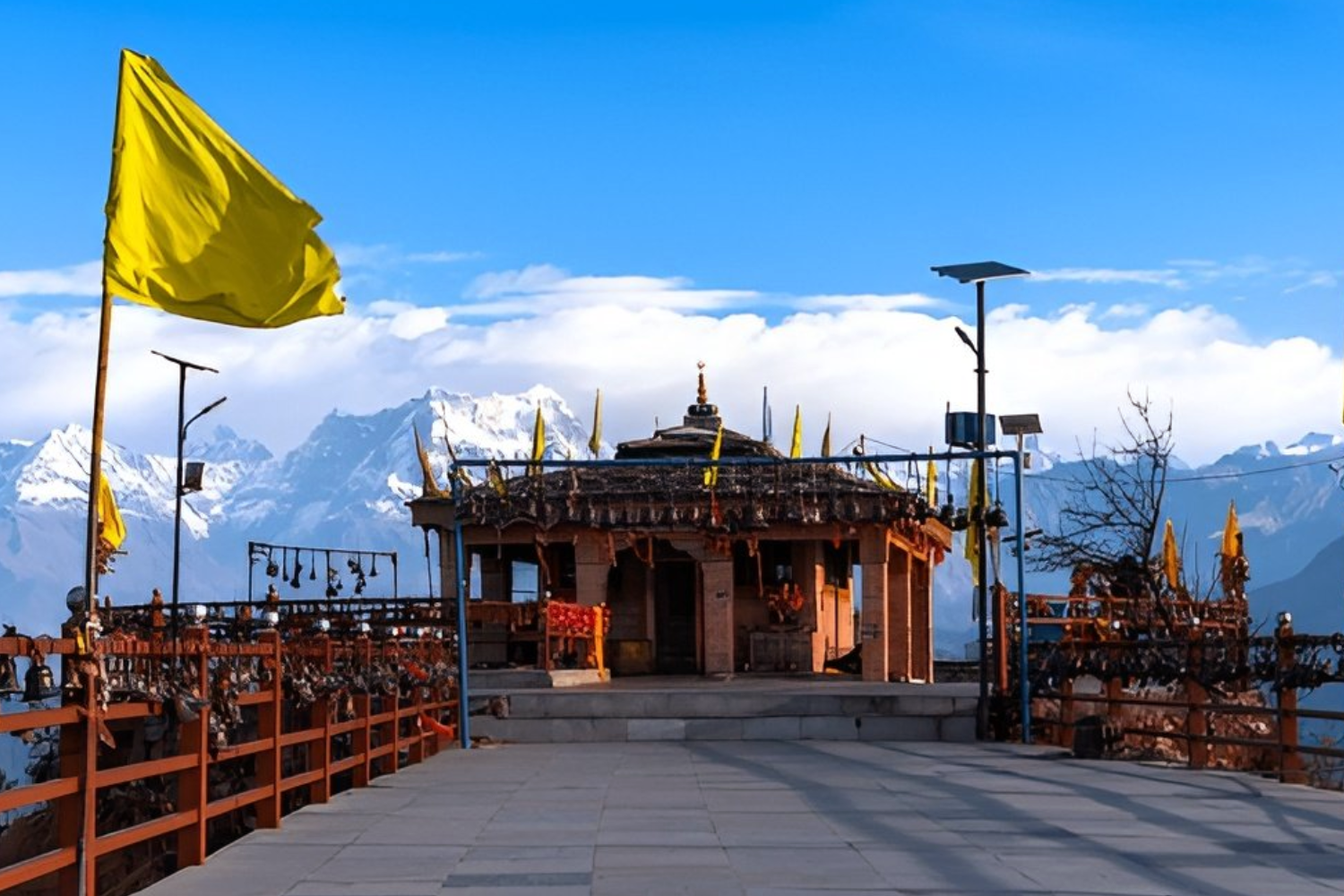
Unlike many temples that are reached by road, Kartik Swami Mandir requires a 3 km uphill trek from Kanakchauri village. The reward at the summit is extraordinary: uninterrupted 360-degree views of Himalayan peaks, including Chaukhamba, Kedarnath, Trishul, Nanda Devi, and Neelkanth on clear days.
For pilgrims travelling along the Chardham route or exploring the sacred geography of Garhwal, Kartik Swami Temple Uttarakhand offers a quieter yet profoundly powerful spiritual detour.
Kartik Swami Temple - At a Glance
| Detail | Information |
|---|---|
| Location | Kanakchauri, Rudraprayag District |
| Altitude | 3,048 metres |
| Trek Distance | 3 km (one way) |
| Trek Duration | 1.5-2.5 hours (ascent) |
| Difficulty Level | Easy to Moderate |
| Best Time to Visit | April-June & October-November |
| Nearest Town | Rudraprayag (35 km) |
| Nearest Airport | Jolly Grant Airport, Dehradun |
| Temple Timings | 6:00 AM - 7:00 PM (seasonal variations possible) |
Insight : Travellers frequently underestimate the altitude impact. While the trek is short, the elevation gain of roughly 700 metres demands steady pacing.
The Legend and Spiritual Significance of Kartik Swami Temple
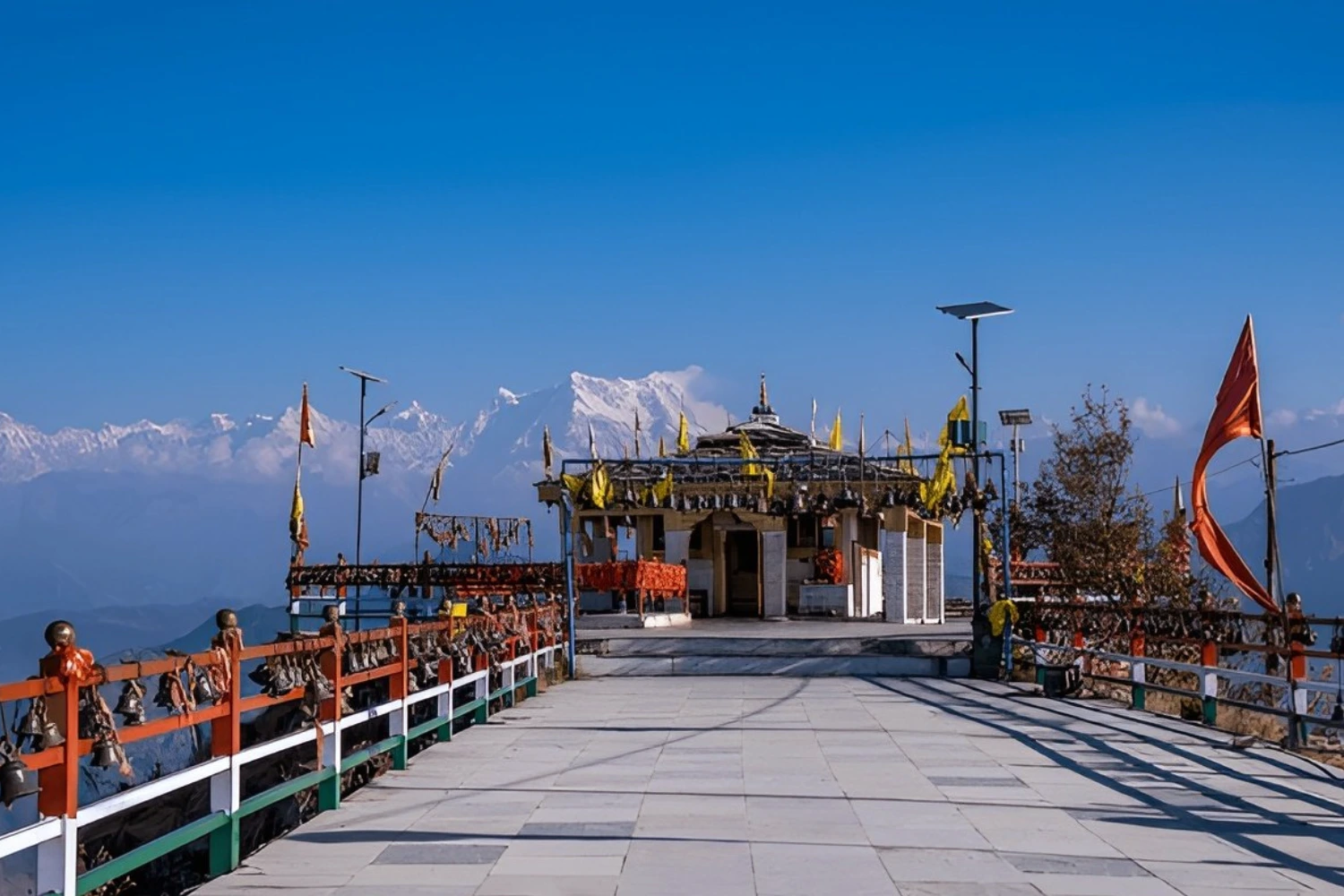
The temple’s origin lies in one of Hindu mythology’s most poignant stories, the divine challenge between Lord Kartikeya and his brother Ganesha.
According to tradition, Kartikeya and Ganesha were asked by their parents, Shiva and Parvati, to circumambulate the universe. Kartikeya set off on his peacock mount to circle the cosmos. Ganesha, choosing wisdom over speed, simply circumambulated his parents, declaring them his universe.
When Kartikeya returned and found that Ganesha had won the sacred fruit of knowledge, he felt deeply hurt and withdrew to the Himalayas in solitude. According to local belief, it was on this very peak that he renounced worldly attachments and attained spiritual transcendence.
This legend gives Kartik Swami Temple a unique emotional and philosophical depth. Devotees believe that worship here grants:
- Courage and mental strength
- Victory over adversity
- Clarity of thought
- Success in competitive pursuits
Insight
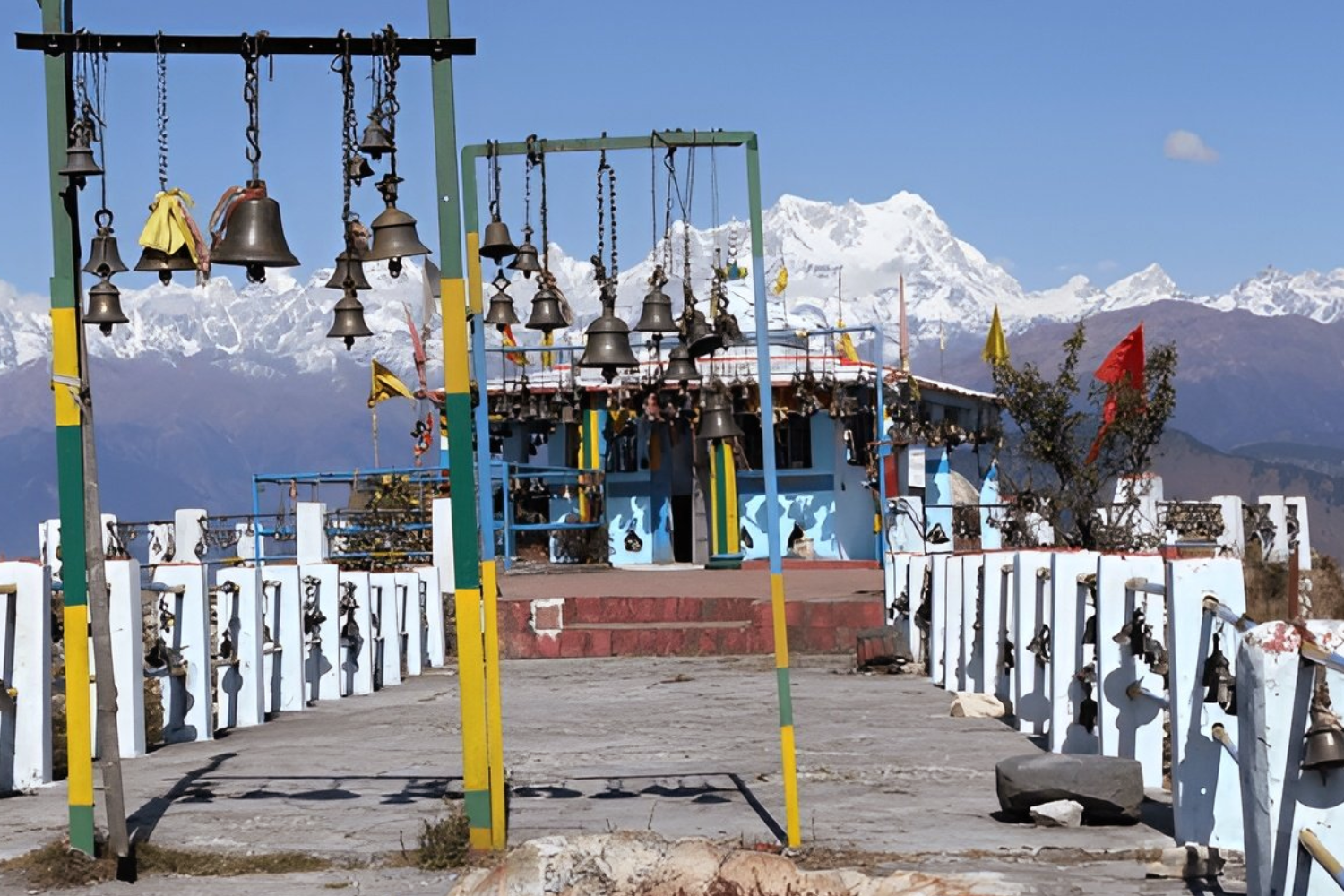
- The "Bell of Courage" Tradition: The path to the sanctum is lined with thousands of brass bells offered by devotees. Do not just ring any bell. Tradition dictates that pilgrims should find a bell that has "weathered to green" (verdigris) to ring—symbolising an ancient prayer that has stood the test of mountain wind.
- Look for the "Bindis and Bangles" tied to the trees by local women as offerings to the Van Devi (Forest Goddess) a short distance before the summit.
Kartik Swami Temple Trekking Guide
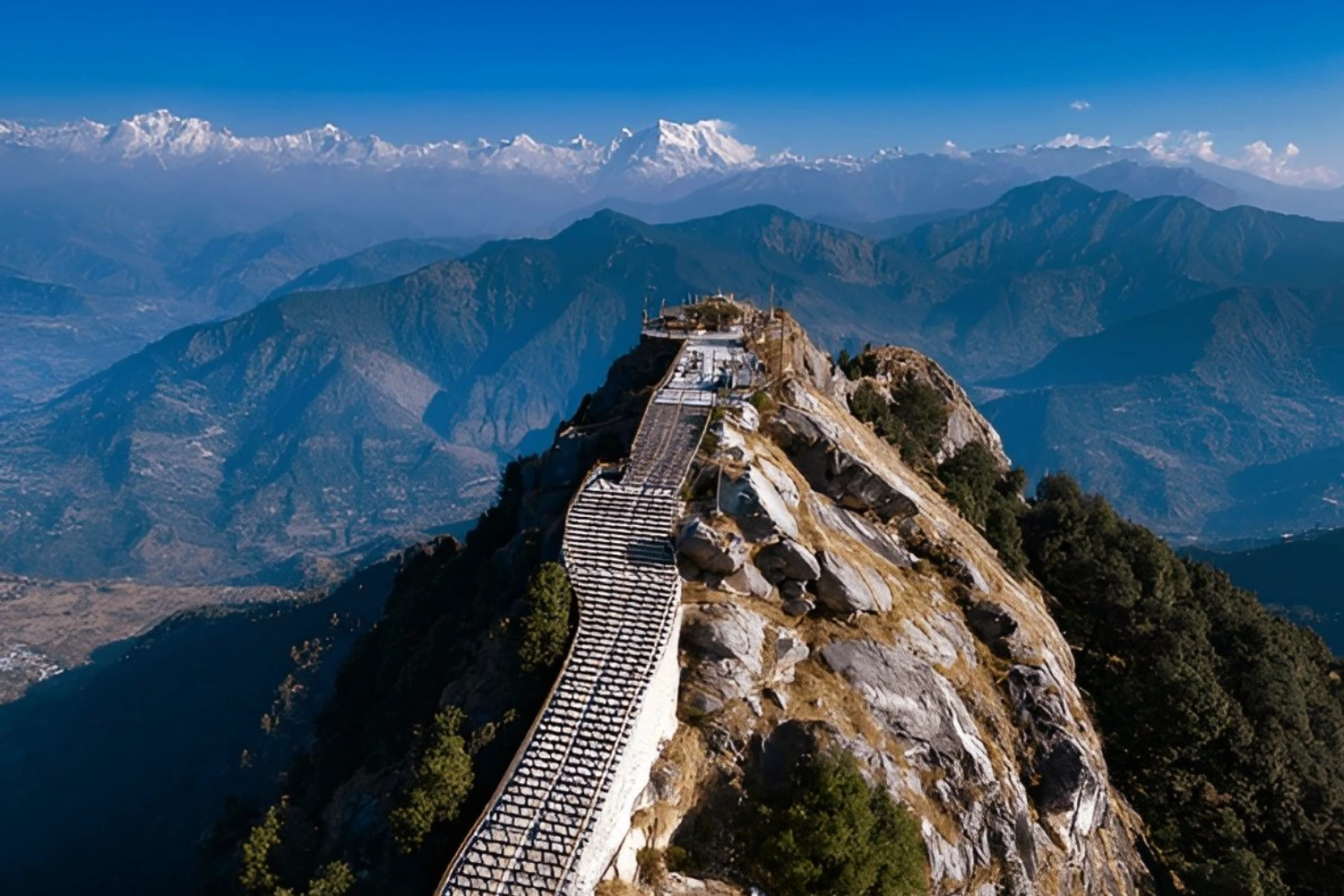
The Kartik Swami Temple trek is one of the most rewarding short Himalayan treks. It is manageable for beginners yet dramatic enough to leave a lasting impression.
Trek Overview
| Aspect | Details |
|---|---|
| Starting Point | Kanakchauri Village |
| Distance (One Way) | 3 km |
| Elevation Gain | Approx. 700 metres |
| Time to Ascend | 1.5-2.5 hours |
| Time to Descend | 1-1.5 hours |
| Trail Type | Stone steps + forest path |
| Suitable For | Families, senior pilgrims (with breaks) |
| Trek Difficulty | Easy to Moderate |
Insight : The path is well-maintained with stone steps covering significant sections. Tea stalls and rest points are available at intervals.
What Makes This Trek Special?
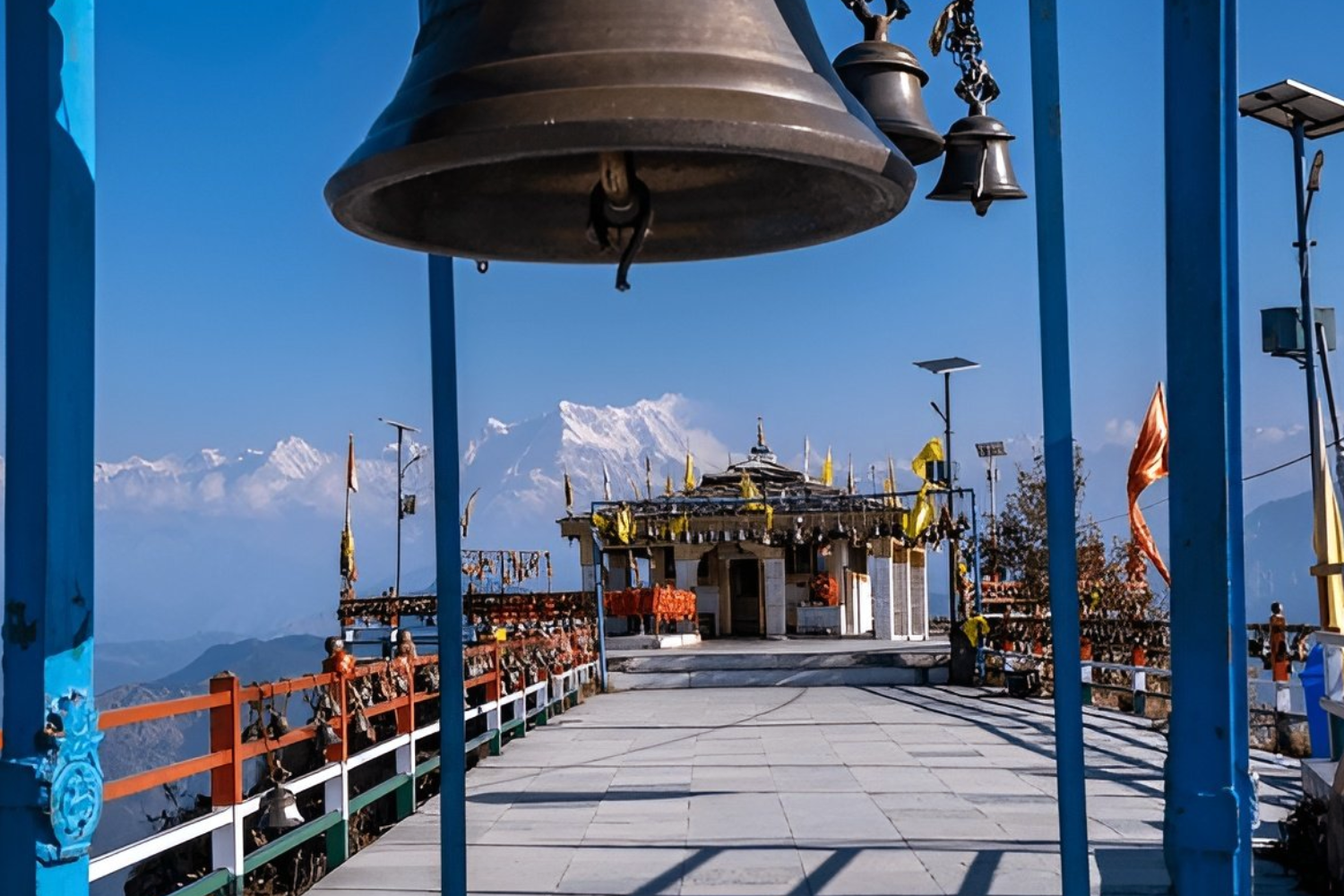
As you climb through oak and rhododendron forests, the trail gradually opens onto a narrow ridge. The final stretch reveals a sweeping Himalayan panorama that feels almost cinematic in scale.
On clear mornings, visible peaks include:
- Chaukhamba
- Kedarnath
- Trishul
- Nanda Devi
- Neelkanth
Few short treks in Uttarakhand deliver such dramatic 360-degree summit views.
Insight : Most visitors mistake the peaks due to their sheer scale. Looking north-east, the massive four-pillared massif is Chaukhamba. If you look slightly to the left, the sharp pyramid is Kedarnath Dome. On an exceptionally clear post-monsoon day (October), you can even spot the "faint tooth" of Bandarpunch far to the west.
Kartik Swami Temple Timings & Darshan
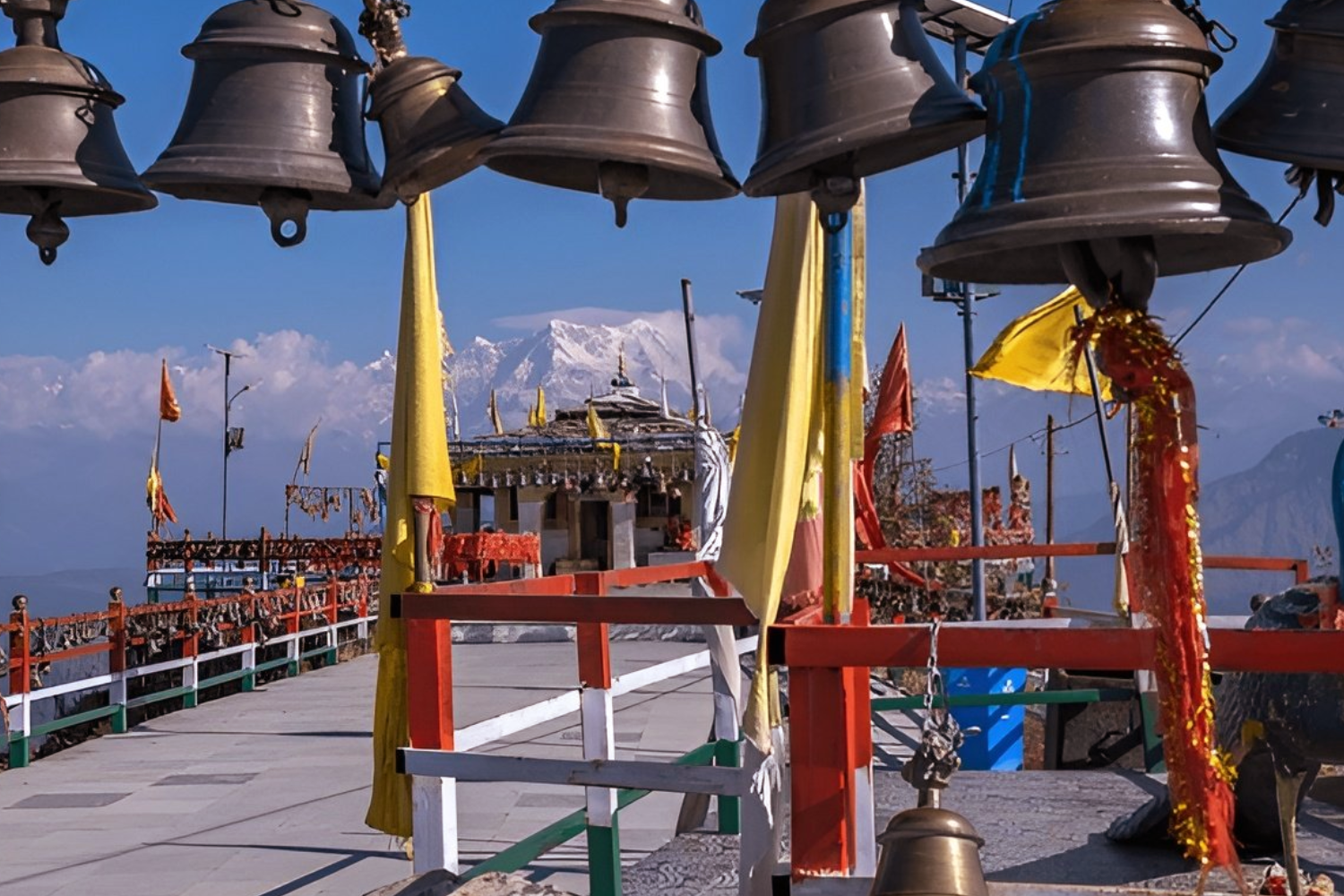
- Temple Opening Time: Around 6:00 AM
- Temple Closing Time: Around 7:00 PM
- Morning & evening aarti is performed daily
- No entry fees
Sunset aarti is particularly atmospheric, as golden light spreads across the Himalayan peaks. Winter access depends heavily on snowfall. While the temple does not officially close like higher Himalayan shrines, heavy snow from January to February can make the trail unsafe.
How to Reach Kartik Swami Temple?
By Air :
- Nearest airport: Jolly Grant Airport
- Distance to Kanakchauri: ~230 km
From the airport, private taxis are available via Rishikesh and Rudraprayag.
By Train :
Nearest railway stations:
- Haridwar
- Rishikesh
From there, taxis and Uttarakhand Roadways buses operate toward Rudraprayag and Pokhari.
By Road :
Primary route: Rishikesh → Devprayag → Srinagar → Rudraprayag → Pokhari → Kanakchauri
The road is motorable throughout most of the year.
Distance Chart
| From | Distance | Approx Travel Time |
|---|---|---|
| Rishikesh | ~190 km | 6-7 hrs |
| Haridwar | ~205 km | 7 hrs |
| Rudraprayag | ~35 km | 1.5 hrs |
| Pokhari | 8 km | 20 mins |
| Chopta | ~35 km | 1.5 hrs |
| Kedarnath Route (via Rudraprayag) | ~75 km | 3-4 hrs |
Insight : Travellers combining Kartik Swami with Kedarnath or Chopta often plan it as part of a multi-day Garhwal circuit.
Best Time to Visit Kartik Swami Temple
Summer (April-June)
- Ideal trekking weather
- Clear views
- Peak pilgrimage season
Monsoon (July-September)
- Lush greenery
- Slippery trails
- Landslide risk
- Not recommended for beginners
Autumn (October-November)
- Crisp air
- Best mountain visibility
- Fewer crowds
Winter (December-March)
- Snowbound upper sections
- Trek unsafe in heavy snowfall
- Avoid unless experienced and properly equipped
Insight : October and November are particularly rewarding for photographers.
Kartik Swami Temple & Chardham Yatra Connection
Although not officially part of the Char Dham circuit, Kartik Swami lies close to the Kedarnath route.
Nearby major shrines:
- Kedarnath Temple
- Tungnath Temple
- Panch Kedar circuit
- Panch Prayag confluences
Pilgrims often include Kartik Swami while travelling to or from Kedarnath, adding depth to their Garhwal spiritual journey.
Nearby Attractions
| Place | Distance | Why Visit |
|---|---|---|
| Rudraprayag | 35 km | Confluence of Alaknanda & Mandakini |
| Ukhimath | 40 km | Winter seat of Kedarnath |
| Chopta | 35 km | Base for Tungnath & Chandrashila |
| Deoria Tal | 45 km | Lake with Chaukhamba reflection |
| Augustmuni | 20 km | Quiet riverside town |
Insight : A well-planned Garhwal pilgrimage itinerary can combine 3-4 of these seamlessly.
Accommodation Near Kartik Swami Temple
Best stay options:
- Pokhari (budget lodges)
- Rudraprayag (wider range of hotels)
- Ukhimath (if combining with Chopta/Tungnath)
Peak months (May-June & October) require advance booking.
Insight:
- Facilities in Kanakchauri are rustic and primarily homestays. If you are a light sleeper, bring earplugs. The village dogs are highly active at night, protecting livestock from leopards that roam the surrounding dense rhododendron forests
- Order Mandua ki Roti (finger millet bread) and Pahadi Gahat Dal at a local village dhaba. This high-protein, warming meal is the traditional fuel used by locals for the 700-metre elevation gain.
Essential Travel Tips
- Start the trek before 8:00 AM. Travellers frequently misjudge how quickly cloud cover can obscure mountain views. Early morning is key.
- Carry water & light snacks
- Wear layered clothing
- Carry trekking poles if needed
- Check road conditions during monsoon
- Withdraw cash in Rudraprayag
- Respect temple customs
- Mandatory Plastic Audit : The forest department maintains a registration desk at the Kanakchauri trailhead. They enforce a strict "plastic audit". Every water bottle or snack packet you carry up is counted at the start and must be accounted for upon your return. Failure to bring back your trash results in a penalty on the spot.
- Connectivity Gap : There is zero mobile data at the temple summit. Download your offline maps and peak-identifier apps at Rudraprayag (35 km away) before heading up.
Why Kartik Swami Temple Deserves a Place in Your Uttarakhand Itinerary?
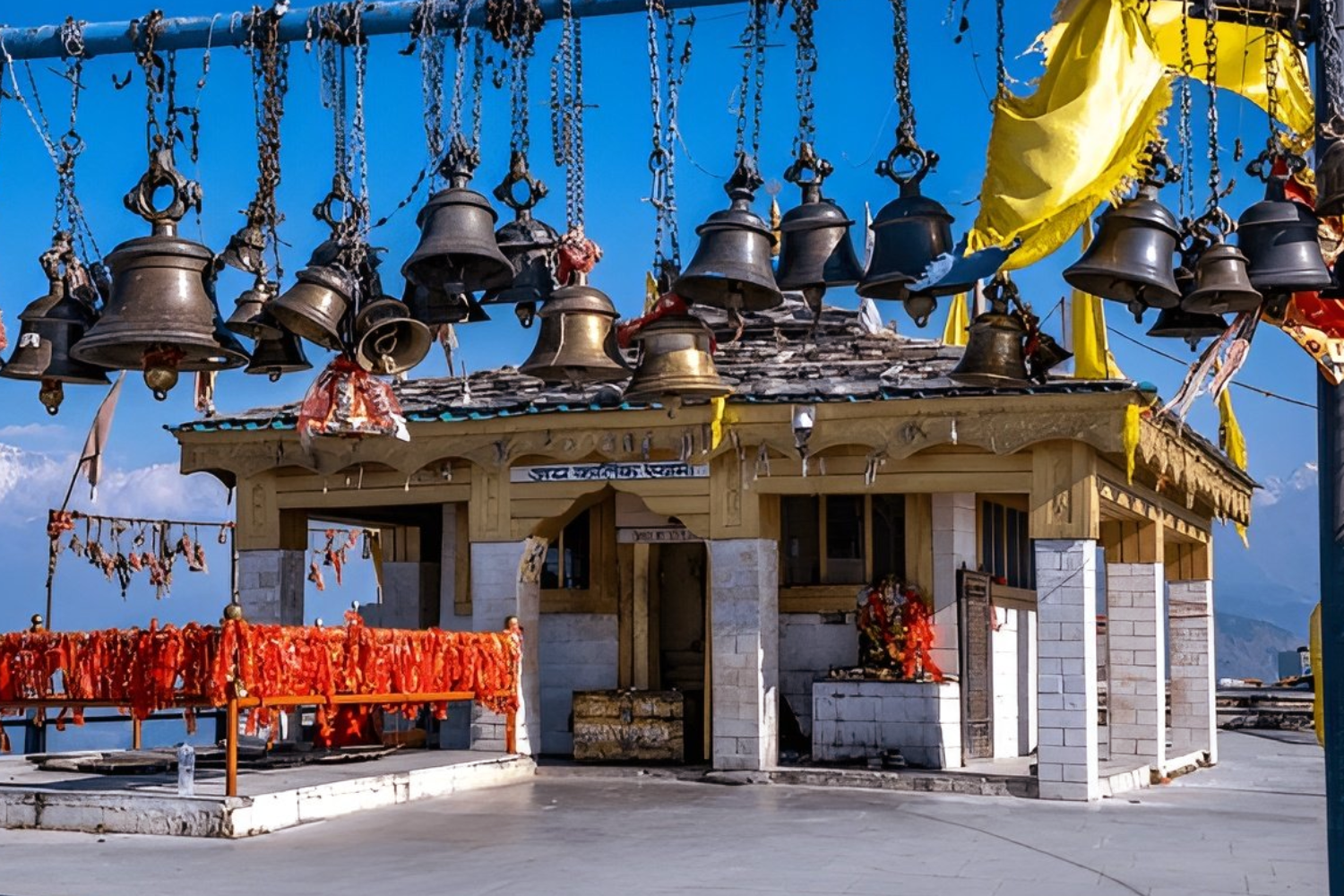
Kartik Swami Temple is not a grand architectural monument. Its power lies in its setting, a narrow Himalayan ridge surrounded by snow-clad giants. It is a temple of sky and wind, of silence and perspective.
- For pilgrims, it offers devotion.
- For trekkers, it offers one of Uttarakhand’s finest short summit experiences.
- For spiritual travellers, it offers a quieter alternative to crowded dhams.
Kartik Swami Temple FAQs
The Kartik Swami Temple trek is 3 km one way.
The Kartik Swami Temple trek is easy to moderate; manageable for most healthy individuals.
The height of the Kartik Swami Temple is approximately 3,048 metres above sea level.
Yes, the temple is accessible in early winter, but heavy snowfall can block the trail.
Yes, with precautions. Because the distance is only 3 km, many elderly pilgrims complete the trek successfully. However:
- The climb is continuous
- Altitude is over 3,000 metres
- Knee issues may require trekking poles
Recommendation : Start early, take slow breaks, and hydrate adequately. Travellers above 60 should consult a doctor if they have cardiac or respiratory concerns.
No. Stay in Pokhari, Rudraprayag, or nearby towns.
Yes. It lies conveniently along the Kedarnath highway route.
Popular Tours
Book The Tour
Char Dham Temples
Hotels in Chardham Circuit
Char Dham Tour Packages
- Char Dham Yatra From Delhi
- Chardham Yatra From Mumbai
- Char Dham Yatra From Ahmedabad
- Chardham Tour with Hemkund Sahib
- Chardham Yatra by Helicopter
- Char Dham Yatra with Vaishno Devi & Amritsar
- Chardham Tour with Gomukh Trek
- Char Dham Packages From Bangalore
- Chardham Yatra From Chandigarh
- Char Dham Yatra with Auli
- Char Dham Yatra From Hyderabad
- Char Dham Yatra with Vaishno Devi, Jwalaji & Amritsar
- Char Dham Yatra From Chennai
- Chardham Packages From Bhopal
- Char Dham Yatra by Luxury Vehicle
- Char Dham Yatra with Satopanth Lake
- Char Dham Yatra with Panch Badri Tour
- Char Dham with Valley of Flowers
- Chardham Yatra with Mahavatar Baba and Nainital Tour
Do Dham Yatra
- Badrinath Kedarnath Yatra From Haridwar
- Badrinath Kedarnath Yatra
- Gangotri Yamunotri Yatra
- Gangotri Yamunotri Yatra from Haridwar
- Kedarnath Badrinath Yatra with Hemkund Sahib
- Kedarnath Badrinath Yatra with Valley of Flowers
- Kedarnath, Badrinathdham With Lake Of Nainital
- Yamunotri, Gangotri with Lake of Nainital
Ek Dham Yatra
- Badrinath Pilgrimage Tour
- Kedarnath Pilgrimage Tour
- Gangotri Pilgrimage Tour
- Yamunotri Pilgrimage Tour
- Kedarnath Yatra By Helicopter
- Badrinath Dham Yatra from Haridwar
- Badrinath Yatra with Hemkund Sahib
- Badrinath Yatra with Valley of Flowers
- Gangotri Dham Yatra with Gaumukh
- Kedarnath Dham Vasuki Tal Trek
