Dhari Devi Temple – Complete Travel Guide
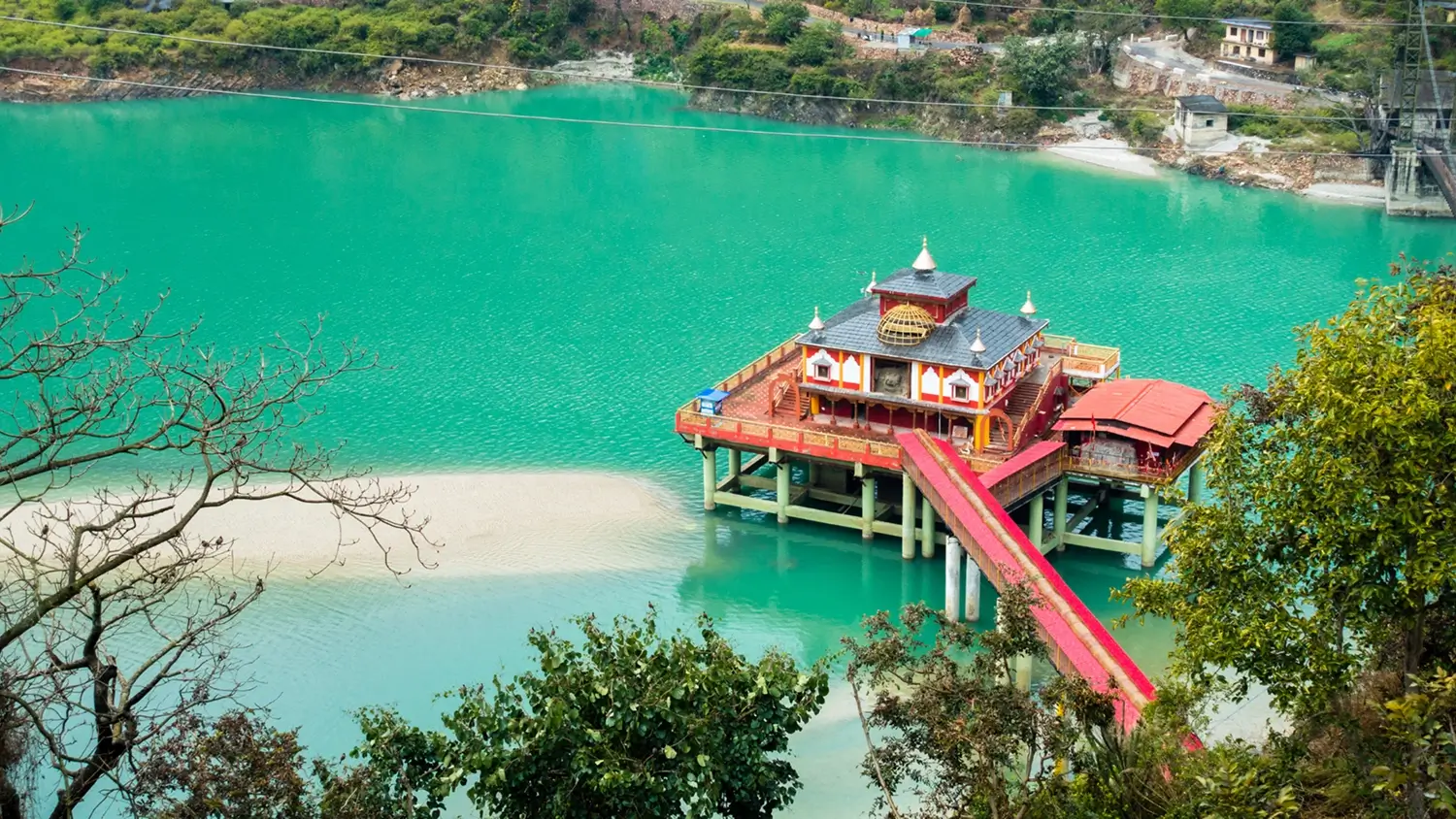
Rising from the middle of the Alaknanda River in the Garhwal region of Uttarakhand, Dhari Devi Temple is one of the most powerful and visually striking shrines in the Himalayas. Located near Kaliyasaur village on the Rishikesh–Badrinath highway, approximately 14 km from Srinagar, this temple is dedicated to Goddess Dhari Devi, a fierce manifestation of Kali and the presiding guardian deity of the entire Garhwal region.
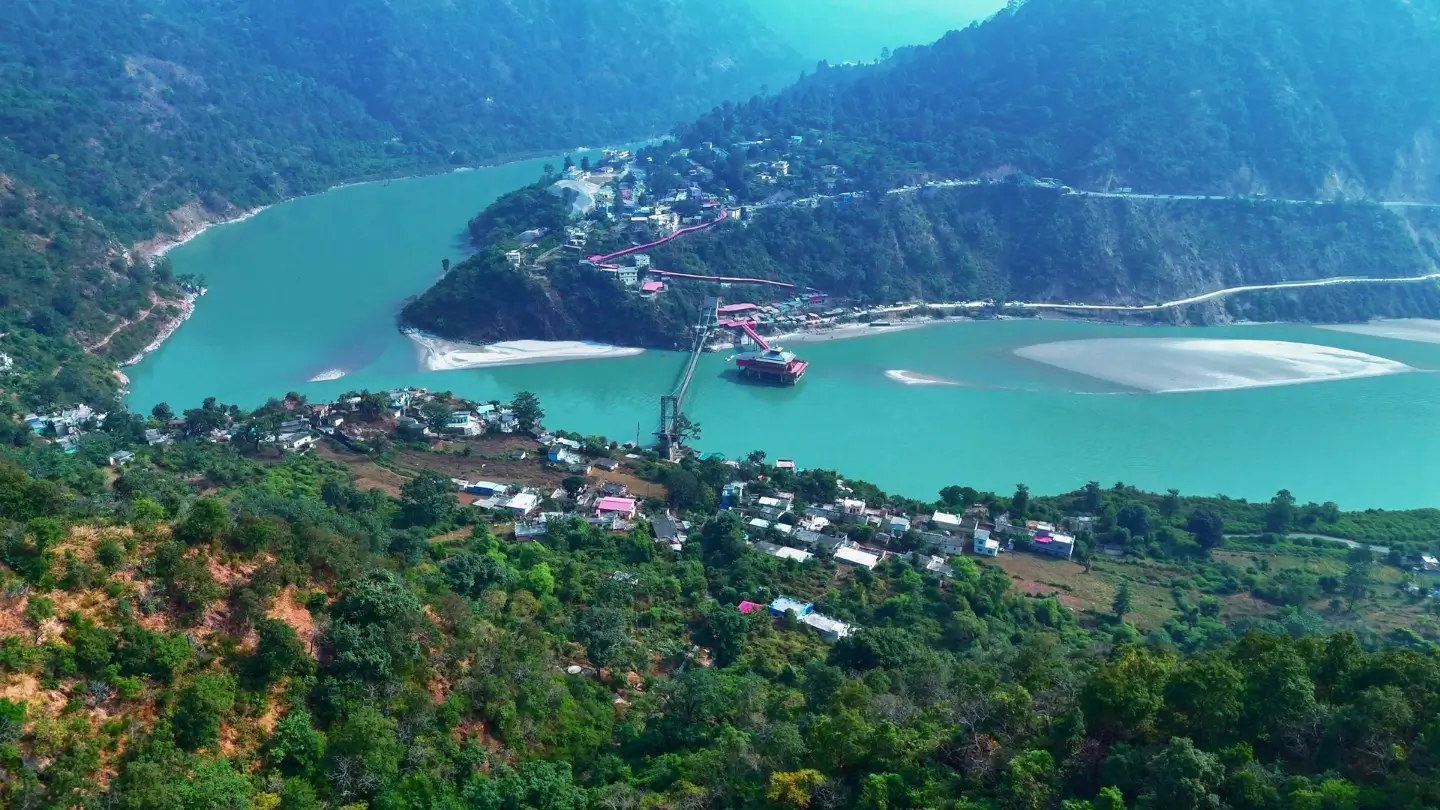
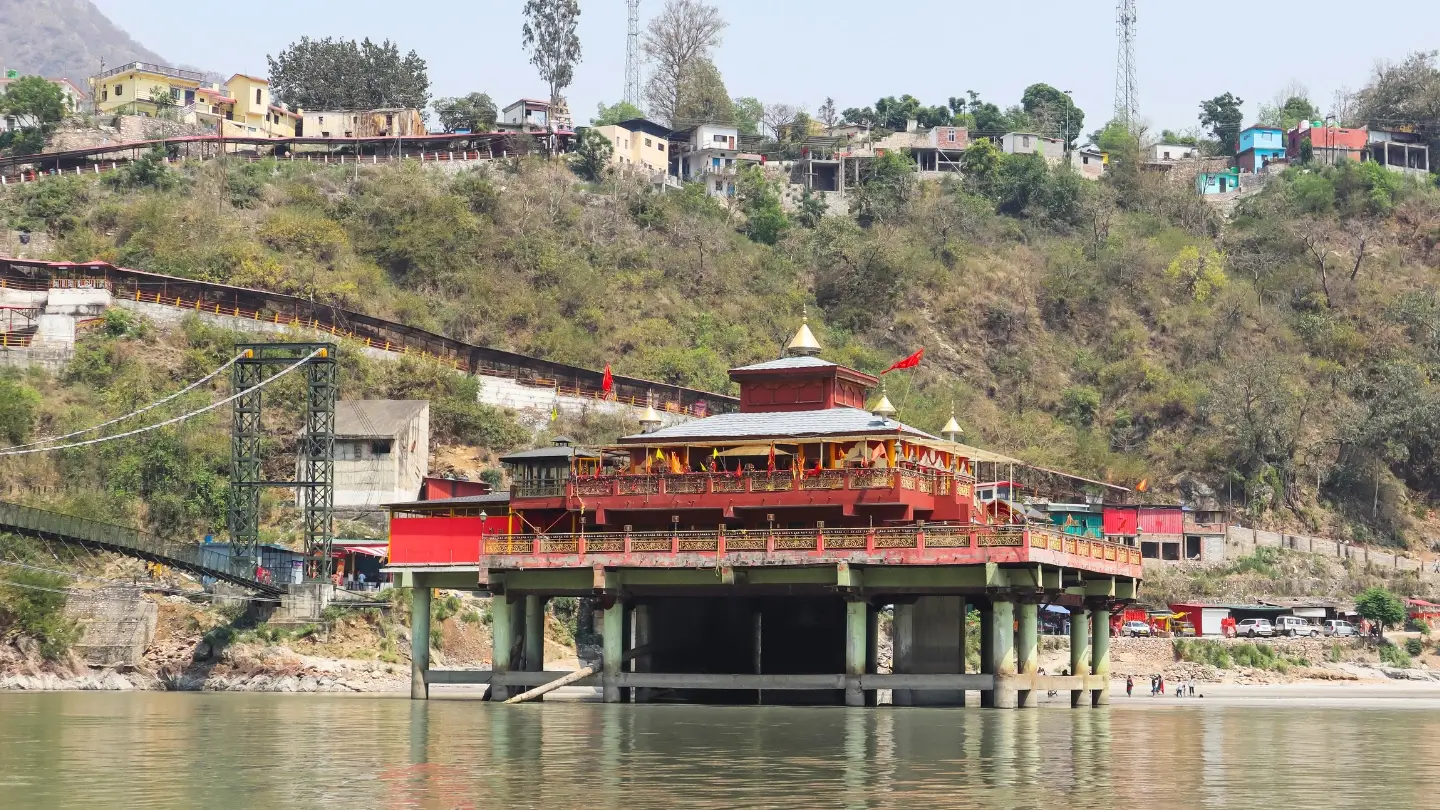
Unlike most Himalayan temples perched on hillsides, Dhari Devi Mandir stands on a rock platform above the rushing Alaknanda River. Pilgrims cross a narrow bridge to reach the shrine, surrounded on all sides by the roar of the sacred river.
Across Uttarakhand, Dhari Devi is revered as the Raksha Devi, the divine protector of the Char Dham Yatra. Local belief holds that no pilgrimage to Yamunotri, Gangotri, Kedarnath, or Badrinath is spiritually complete without first seeking her blessings.
Dhari Devi Temple – At a Glance
| Detail | Information |
|---|---|
| Location | Kaliyasaur, Pauri Garhwal District |
| Distance from Srinagar | 14 km |
| Distance from Rudraprayag | 19 km |
| River | Alaknanda River |
| Open Season | Year-round |
| Temple Timings | 6:00 AM – 8:00 PM (approx.) |
| Entry Fee | No entry fee |
| Best Time to Visit | April–June & October–November |
| Significance | Guardian deity of Chardham Yatra |
Insight : Travellers often include Dhari Devi as the first sacred stop while ascending toward Badrinath or Kedarnath.
The Legend and Mythology of Dhari Devi
The spiritual significance of Dhari Devi Temple is rooted in ancient Garhwali tradition.
According to legend, the idol was originally part of a complete form of Goddess Kali enshrined upstream. A devastating flood broke the idol into two parts. The upper half floated downstream and stopped at its present mid-river location near Dhara village. Villagers reportedly heard a divine command instructing them not to move the idol from the river.
The lower half of the idol came to rest at Kalimath Temple, where it continues to be worshipped as Goddess Kali. Devotees consider both shrines spiritually connected, and many undertake a combined Shakti pilgrimage covering both temples.
The Changing Face Phenomenon
One of the most remarkable beliefs associated with Dhari Devi is that her facial expression changes three times daily:
- Morning (6:00 AM – 10:00 AM) : The idol appears as a young girl (Bal Roop), symbolising innocence.
- Afternoon (12:00 PM – 3:00 PM) : She manifests as a beautiful young woman (Yugti/Yuvti), representing strength.
- Evening (After 5:00 PM) : She appears as an old lady (Vriddha), symbolising wisdom.
Devotees often plan their visit around these three darshan phases, believing the goddess manifests different energies at each time of day.
Tip : For photographers, the "old lady" form under the artificial temple floodlights offers the most striking contrast, as the silver idol glows against the dark river currents.
The 2013 Kedarnath Flood and Dhari Devi
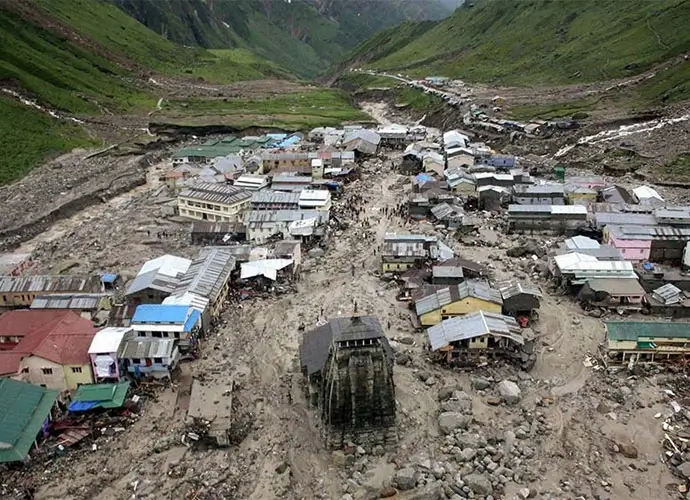
No guide to Dhari Devi Temple is complete without acknowledging the events of June 2013. On 16 June 2013, the idol was temporarily relocated as part of a hydroelectric dam project on the Alaknanda River. Within hours, catastrophic floods struck the Kedarnath region and broader Garhwal Himalayas, causing widespread devastation.
Local residents and priests maintain a fierce conviction that the 2013 Kedarnath disaster was triggered by the removal of the Dhari Devi idol from its original rock. In 2023, the deity was finally re-established on a new permanent structure elevated above the reservoir.
Insight : When visiting, look at the submerged ruins of the old temple path beneath the current bridge; it serves as a sobering reminder of the goddess's reputation as the "Goddess of Floods".
How to Reach Dhari Devi Temple?
Dhari Devi Temple is one of the most accessible sacred sites in Garhwal, located directly on the Badrinath National Highway (NH7).
By Air :
Nearest airport : Jolly Grant Airport
Distance : Approx. 130 km
Drive time : 3.5–4 hours via Rishikesh.
By Train :
Nearest railway stations:
- Haridwar
- Rishikesh
From Haridwar or Rishikesh, the temple is about 110 km by road.
By Road
Route: Rishikesh → Devprayag → Srinagar → Kaliyasaur
Every vehicle heading toward Badrinath Temple, Kedarnath Temple, and Hemkund Sahib passes Dhari Devi. Because the temple sits directly on the highway, no trekking is required.
Distance Chart
| From | Distance | Approx Travel Time |
|---|---|---|
| Rishikesh | 110 km | 3–3.5 hrs |
| Haridwar | 125 km | 3.5–4 hrs |
| Srinagar (Garhwal) | 14 km | 25 mins |
| Rudraprayag | 19 km | 30–40 mins |
| Devprayag | 55 km | 1.5 hrs |
Dhari Devi Temple Timings & Darshan
- Opening Time: Around 6:00 AM
- Closing Time: Around 8:00 PM
- Morning Aarti: Around 6:00 AM
- Evening Aarti: Around sunset
Tip : For the most powerful experience, attend the Sandhya Aarti just before sunset. The red tilak on her silver face glows under floodlights against the darkening roar of the Alaknanda.
Best Time to Visit Dhari Devi Temple
Summer (April–June)
- Peak Chardham Yatra season
- Pleasant weather
- Moderate crowds
Monsoon (July–September)
- River at full force
- Dramatic setting
- Landslide risk on highways
Autumn (October–November)
- Clear skies
- Fewer crowds
- Ideal for photography
Winter (December–March)
- Quiet and peaceful
- Cold valley temperatures
- Minimal crowd
Insight: Unlike Kedarnath or Badrinath, Dhari Devi Temple remains open year-round.
Dhari Devi as the Guardian of Chardham Yatra
Among all beliefs associated with this shrine, the strongest is her role as protector of the Char Dham. This stop is not merely logistical; it is considered spiritually essential.
The four dhams, Yamunotri, Gangotri, Kedarnath, and Badrinath, are believed to remain under Dhari Devi’s watchful protection.
Many organised Char Dham itineraries deliberately include a Dhari Devi stop either before ascending toward Kedarnath/Badrinath or while returning from the pilgrimage.
Dhari Devi Temple & the Shakti Circuit
Dhari Devi is central to the Uttarakhand Shakti pilgrimage tradition. Together they form a powerful goddess pilgrimage circuit across Uttarakhand.
Important Shakti shrines often combined include:
| Shrine | Location | Significance |
|---|---|---|
| Kalimath Temple | Rudraprayag | Lower half of Dhari Devi idol |
| Surkanda Devi Temple | Near Chamba | Hilltop Shakti shrine |
| Chandrabadni Temple | Tehri Garhwal | One of 51 Shakti Peethas |
| Naina Devi Temple | Kumaon | Sacred goddess temple |
Insight : Your pilgrimage is considered incomplete without visiting Kalimath Temple near Guptkashi. While the upper half of the deity is worshipped here at Dhari Devi, the torso (Shree Yantra) is worshipped at Kalimath. Visiting both within the same trip is the traditional way to honour the complete manifestation of the Goddess.
Nearby Attractions
| Place | Distance | Why Visit |
|---|---|---|
| Srinagar (Garhwal) | 14 km | Major base town |
| Rudraprayag Confluence | 19 km | Panch Prayag site |
| Devprayag | 55 km | Birthplace of River Ganga |
| Kartik Swami Temple | 35 km | Hilltop temple with panoramic views |
| Kalimath Temple | 45 km | Linked Shakti shrine |
Insight : A well-planned Garhwal itinerary can comfortably include 3–4 of these sites in 2–3 days.
Where to Stay Near Dhari Devi Temple?
The best base towns are:
- Srinagar (Garhwal) – widest hotel options
- Rudraprayag – riverside accommodations
- Devprayag – for extended circuit travellers
Peak season (May–June) requires advance booking.
Travellers combining Dhari Devi with Char Dham or Panch Prayag circuits benefit from structured route planning to reduce unnecessary travel backtracking.
Essential Travel Tips
- QR-Code Checkpoint: Dhari Devi is now a major checkpoint for the Char Dham Yatra. You must have your Tourist Care Uttarakhand QR code ready on your phone or printed. Even though entry is free, police at the highway entry gate often scan these to track pilgrim flow into the upper valleys.
- Vehicles stop on the highway near the temple gate. Expect a 500–600 metre walk across a well-built pedestrian bridge.
- For those with limited mobility, Doli (palanquin) services are available from the highway down to the temple for approx. ₹500–800 round trip.
- Plan darshan early morning or evening
- Carry modest attire
- Withdraw cash in Srinagar
- Check highway conditions during monsoon
- Avoid littering near the river
- Allocate 45–60 minutes for darshan
Insight: Travellers often underestimate traffic congestion during peak Chardham season. Plan buffer time accordingly.
Why Dhari Devi Temple is Essential in Uttarakhand Pilgrimage?
Dhari Devi Temple is not merely another stop along the Badrinath highway. It is the spiritual threshold of the Garhwal Himalayas.
Pilgrims ascending toward Kedarnath and Badrinath pause here not out of convenience, but reverence. The goddess is believed to guard the valleys, protect travellers, and preserve the sacred geography of Uttarakhand.
The roar of the Alaknanda beneath the shrine, the changing face of the goddess, and the enduring faith of generations make Dhari Devi Temple one of the most powerful spiritual experiences in the Himalayas.
For Char Dham pilgrims, Shakti devotees, and travellers exploring Garhwal’s sacred landscape, this temple is not optional. It is foundational.
Dhari Devi Temple FAQs
Yes, Dhari Devi Temple remains open even in winter.
Dhari Devi Temple is approximately 110 km from Rishikesh.
No, the temple is accessible directly from the highway.
She is believed to be the guardian deity protecting all four dhams.
The idol is located mid-river on the Alaknanda and is believed to change facial expression three times daily.
Yes, both form a spiritually connected Shakti pilgrimage.
Popular Tours
Book The Tour
Char Dham Temples
Hotels in Chardham Circuit
Char Dham Tour Packages
- Char Dham Yatra From Delhi
- Chardham Yatra From Mumbai
- Char Dham Yatra From Ahmedabad
- Chardham Tour with Hemkund Sahib
- Chardham Yatra by Helicopter
- Char Dham Yatra with Vaishno Devi & Amritsar
- Chardham Tour with Gomukh Trek
- Char Dham Packages From Bangalore
- Chardham Yatra From Chandigarh
- Char Dham Yatra with Auli
- Char Dham Yatra From Hyderabad
- Char Dham Yatra with Vaishno Devi, Jwalaji & Amritsar
- Char Dham Yatra From Chennai
- Chardham Packages From Bhopal
- Char Dham Yatra by Luxury Vehicle
- Char Dham Yatra with Satopanth Lake
- Char Dham Yatra with Panch Badri Tour
- Char Dham with Valley of Flowers
- Chardham Yatra with Mahavatar Baba and Nainital Tour
Do Dham Yatra
- Badrinath Kedarnath Yatra From Haridwar
- Badrinath Kedarnath Yatra
- Gangotri Yamunotri Yatra
- Gangotri Yamunotri Yatra from Haridwar
- Kedarnath Badrinath Yatra with Hemkund Sahib
- Kedarnath Badrinath Yatra with Valley of Flowers
- Kedarnath, Badrinathdham With Lake Of Nainital
- Yamunotri, Gangotri with Lake of Nainital
Ek Dham Yatra
- Badrinath Pilgrimage Tour
- Kedarnath Pilgrimage Tour
- Gangotri Pilgrimage Tour
- Yamunotri Pilgrimage Tour
- Kedarnath Yatra By Helicopter
- Badrinath Dham Yatra from Haridwar
- Badrinath Yatra with Hemkund Sahib
- Badrinath Yatra with Valley of Flowers
- Gangotri Dham Yatra with Gaumukh
- Kedarnath Dham Vasuki Tal Trek
