Shri Badrinath Dham


Badrinath Yatra Tour
Among the oldest pilgrimage sites in India, Badrinath Dham or Badrinath temple has immense significance for Hinduism. Nestled in the Garhwal hills near the Alaknanda river, at an altitude of 10,279 ft, the temple offers scenic views of the snow-clad Himalayas and quaint surroundings. The natural beauty of the holy site draws many visitors from across the country. The temple, situated in the small town of Badrinath in the state of Uttarakhand, is dedicated to Lord Vishnu who is considered to be the protector in Hinduism. Badrinath Temple is one of the 108 Divyadesha (holy site) for Vishnu followers, and alongside 3 other sites, forms Hinduism's holiest Char Dhams, or, Four Sites of pilgrimage.
It is no wonder then, that Badrinath welcomes more than 1 million visitors every year, making it one of the most visited religious destinations in India. It is widely believed that the temple was founded by the renowned ascetic, Adi Shankaracharya.
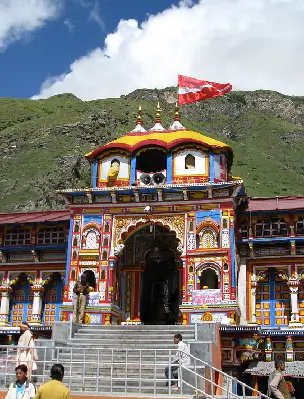
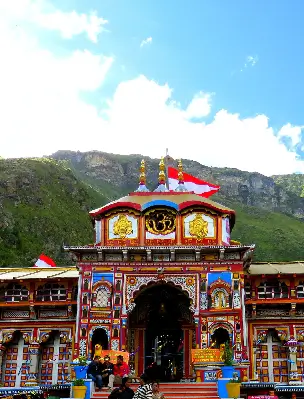
In addition to various idols of Gods and Goddesses, Badrinath temple houses a 1 metre tall black stone idol of Lord Vishnu which is believed to be one of the eight swayam vyakta kshetras (self-manifested statues). The Vishnu shrine has a majestic gate which is painted with vivid colours. The temple also has a Tapta Kund (hot water spring) which is believed to possess medicinal properties. Visitors must plan their visit during the Mata Murti Ka Mela, or the Badri Kedar Festival. Both festivals are celebrated with great enthusiasm.
History & Religious Significance of Badrinath TempleAccording to a popular legend, Lord Vishnu came to the present-day site of the Badrinath temple seeking a quiet place where he could meditate. Enveloped by the undisturbed peace, Vishnu was so deeply engrossed in meditation, he could not even feel the bitter cold against his body. Goddess Lakshmi, who was his consort, manifested herself in the form of a Badri Tree (also known as Jujube) to make sure he was protected from extreme weather conditions. Impressed by Lakshmi's devotion, Lord Vishnu named this site Badrikashram.
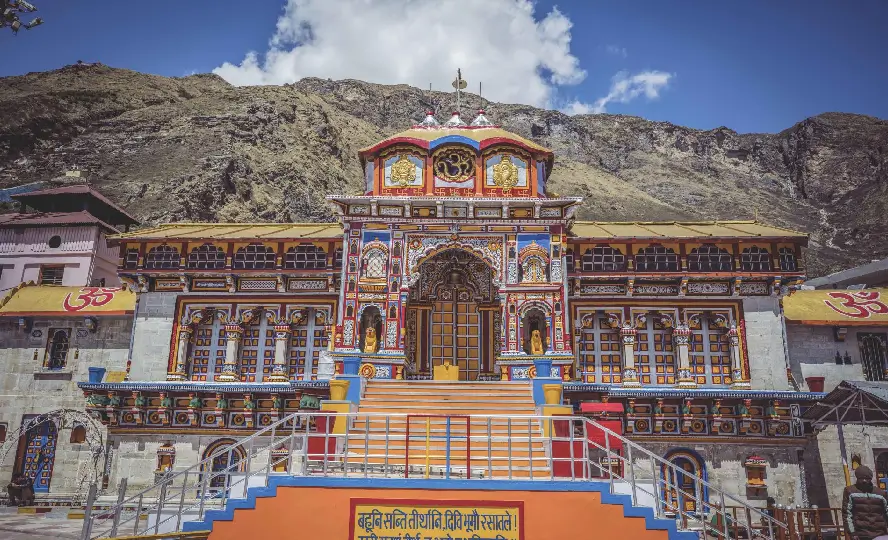
The site also finds mention in the Vishnu Purana. According to the ancient text, the site was often visited by Nara and Narayana, sons of Dharam, who were in search of a place to set up their hermitage. Both men were believed to be human incarnations of Lord Vishnu. When they chanced upon the site with Alaknanda's springs, they knew they had found the ideal location for their ashram.
During the Vedic Era, the deity Badrinarayan and a temple dedicated to him at this very location, has found multiple mentions in various texts. Historical accounts suggest the temple existed since 500 BC.
Badrinath Temple is located in a place that experiences extreme weather conditions, especially during winters. The temple remains closed from November to April. In 2026, the temple will reopen its doors to pilgrims on April 23. Preparations for the Badrinath Yatra 2026 have already begun.
Being an important center of Hinduism, the opening and closing dates of the temple are decided on auspicious days of the Hindu calendar. The opening date is declared on Basant Panchmi while the closing date is declared on Vijaya Dashmi. The entry to Badrinath temple is completely free for all visitors. It remains open from 4:30 AM in the morning to 1:00 PM in the afternoon.
In the evening, the temple is open from 4:00 PM to 9:00 PM. Darshan of Shri Badrinath Ji for the general public opens around 7:30-8:00 AM.
Pooja in Badrinath TempleMany special poojas (prayers) are performed on behest of devotees. A dip in the Tapta Kund is compulsory prior to any pooja. The rituals of the morning pooja include Adhishek, Gitapath, Maha Abhishek, and Bhagwat Path, whereas evening pooja rituals are Aarti and Geet Govind. Devotees may make bookings for Badrinath poojas with the Badrinath Mandir Committee. It is widely believed that the procedures of daily rituals and prayers have been laid by Adi Shankaracharya.
Best Time to Visit Badrinath DhamSummer season, or the months from May to July is the ideal time to visit Badrinath Temple. Although landslides and road blockages do occur during monsoons, you can still visit the Badrinath Dham.
How to Reach Badrinath?-

By Air : The nearest airport from Badrinath is the Jolly Grant Airport in Dehradun (311 km). The airport offers connections to Delhi, Mumbai, Amritsar, Lucknow, Chandigarh, Dharamshala, Jammu, and other cities. Helicopter services to Badrinath are also available, and we can assist you with the booking of helicopter tours to Badrinath.
-

By Road : Badrinath is connected by road to major towns such as Delhi, Chandigarh, Dehradun, Haridwar, and Rishikesh via NH 7. Distance between Delhi and Badrinath is roughly 540 km, and between Haridwar and Badrinath is roughly 320 km. Visitors can also opt for interstate and intrastate buses which are safe, affordable, and comfortable.
-

By Train : Haridwar Railway Station (318 km) is the nearest railway station from Badrinath. Another option is the Dehradun Railway Station (340 km), depending upon your point of origin. The railway station is connected to several major cities.
Panch Badri are the Hindu shrines dedicated to Lord Vishnu. These temples, namely, Vishal Badri (Badrinath), Vridha Badri, Adi Badri, Yogdhan Badri, and Bhavishya Badri, are believed to be the abode of Vishnu. Lord Badrinath is worshipped under five different names at these five temples. A prominent pilgrimage destination for Hindus, the area commencing from Satopanth till Nandprayag is also known as Badri-Kshetra.
Vishal Badri : It refers to the main Shri Badri Narayan Temple which is considered to be very sacred by the Hindus. Located in Chamoli district, it is counted among the 108 Divya Desams, or temples of Vishnu.
Yogathyan Badri : Located at a distance of 24 kms from Badri Nath and 20 kms from Joshimath, Yogathyan Badri is believed to be the place where Maharaj Pandu (the father of the Pandavas) prayed to Pandukeshwar. It gets its name after a statue of Lord Vishnu, which is displayed here in a meditation pose.
Bhavishya Badri : It is a small village located some 17 kms away from Joshimath. As the name suggests, it is believed to become the Badrinath of the future (prime Vishnu pilgrimage). When the world will be completely overrun by evil, Badrinath will become inaccessible to everybody.
Preetha Badri : It is located at a place called Animath, which is 17 kms from Joshimath. Adi Shankar is believed to have worshipped Lord Badrinath here for some time. This is believed to be the place where Lord Vishnu appeared before Sage Narada in the form of an old man when he was undertaking a severe penance. Hence, it was named after him.
Adi Badri : It is located at a distance of 16 kms from Karnaprayag. Here one can find many temples from the Gupta Dynasty; among these temples, the Mana Narayanan temple is the most popular. The presiding deity of the temple is Lord Vishnu, and inside the temple, there is a statue of him carved in black stone. He is depicted carrying a mace, lotus chakra.
Best Places to Visit in and around Badrinath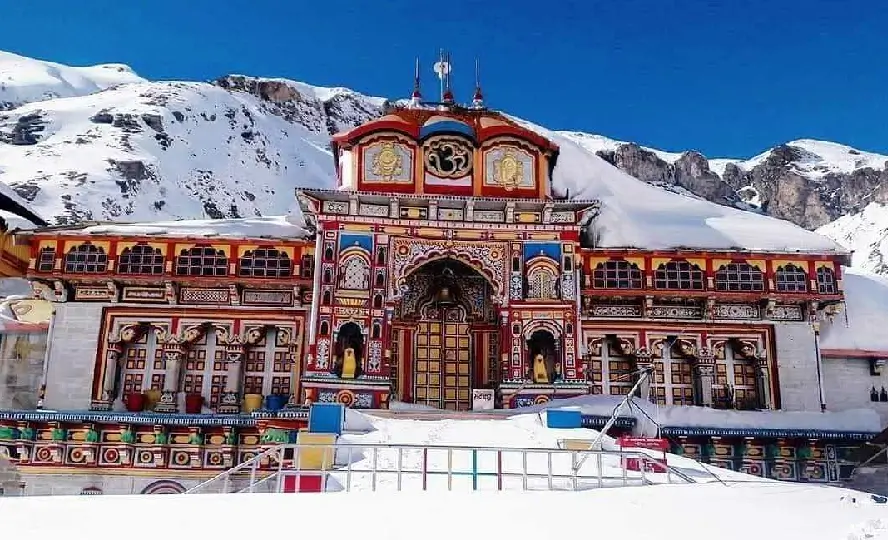
Vasudhara Waterfall : Vasudhara Waterfall is located 9 km from Badrinath. The gushing waterfall has a drop of roughly 400 feet and joins River Alaknanda. Vasundhara is popular among hiking enthusiasts owing to its serene beauty. Visitors can trek 6 km from Mana village to reach the remote location. It is widely believed that only those who are devoid of any guilt or ill will can enjoy the beauty of the falls.
Panch Dhara : Panch Dhara refers to a group of five streams which originate at Badrinath. Prahlad Dhara, Urvashi Dhara, Kurma Dhara, and Indira Dhara, comprise the Panch Dharas. Bhrigu Dhara passes via several caves, while Prahlad Dhara has warm water. The point where they meet is considered to be auspicious by Hindus.
Vyas Cave : Located in Chamoli, a few kilometers from Badrinath, the Vyas Cave is an ancient cave. It is widely believed that the Hindu epic Mahabharata was composed by sage Vyas in this very cave with the help of Lord Ganesha.
Nilkantha Peak : Popular among hikers, Neelkantha is a prominent peak of the Garhwal division, a part of the Himalayas. Known as the Garhwal Queen, the snow-clad mountain towers 11398 feet above Badrinath.
Pandukeshwar : Pandukeshwar, located 18 km from Joshimath, is considered to be a holy site dating back to the Mahabharata era. It is believed that King Pandu (father of the Pandavas) worshipped Lord Shiva here. Today, there are two famous temples, namely, Yog Dhyan Badri Temple (which is dedicated to utsava-murti) and Lord Vasudev Temple, which is commonly believed to be built by the Pandavas.
Mana Village : Known to be the last Indian village near the border between India and Tibet/China, Mana is located 3 km from Badrinath in Chamoli district. Uttarakhand Government has recognized Mana as a 'Tourism Village'. Nestled in the Himalayas, the scenic village stands at an altitude of 3219 meters above sea level and is located on the banks of Saraswati River.
General Information:Temperature
- Summer : Max - 22°C. Min - 9°C.
- Winter : Max - 12°C. Min - -0°C
Clothing
- April To August - Light woolen
- Sept To March - Heavy woolens
- Dehradun: 343 km
- Haridwar: 320 km
- Rishikesh: 297 km
- Deoprayag: 225 km
- Rudraprayag: 155 km
- Karnaprayag: 123 km
- Joshimath: 42 km
Popular FAQ for Badrinath
Nestled in the Garhwal hills near the river Alaknanda, Badrinath Temple is located in the Chamoli district of Uttarakhand.
Yes. The journey to Badrinath can be a long and tiring one. Devotees who wish to save time and avoid a long commute may opt for a helicopter ride. The chartered ride commences at the Sahastradhara helipad in Dehradun and lasts about 50-60 minutes.
They follow a fixed schedule with charters departing early in the morning and returning in the afternoon or early evening. Travelers can book the helicopter services through us (Tour My India), and can also book the Helicopter tour to Badrinath at the last moment if they want.
The Badrinath Temple remains closed from November to April for tourists owing to extreme weather conditions.
Popular Tours
Book The Tour
Char Dham Temples
Hotels in Chardham Circuit
Char Dham Tour Packages
- Char Dham Yatra From Delhi
- Chardham Yatra From Mumbai
- Char Dham Yatra From Ahmedabad
- Chardham Tour with Hemkund Sahib
- Chardham Yatra by Helicopter
- Char Dham Yatra with Vaishno Devi & Amritsar
- Chardham Tour with Gomukh Trek
- Char Dham Packages From Bangalore
- Chardham Yatra From Chandigarh
- Char Dham Yatra with Auli
- Char Dham Yatra From Hyderabad
- Char Dham Yatra with Vaishno Devi, Jwalaji & Amritsar
- Char Dham Yatra From Chennai
- Chardham Packages From Bhopal
- Char Dham Yatra by Luxury Vehicle
- Char Dham Yatra with Satopanth Lake
- Char Dham Yatra with Panch Badri Tour
- Char Dham with Valley of Flowers
- Chardham Yatra with Mahavatar Baba and Nainital Tour
Do Dham Yatra
- Badrinath Kedarnath Yatra From Haridwar
- Badrinath Kedarnath Yatra
- Gangotri Yamunotri Yatra
- Gangotri Yamunotri Yatra from Haridwar
- Kedarnath Badrinath Yatra with Hemkund Sahib
- Kedarnath Badrinath Yatra with Valley of Flowers
- Kedarnath, Badrinathdham With Lake Of Nainital
- Yamunotri, Gangotri with Lake of Nainital
Ek Dham Yatra
- Badrinath Pilgrimage Tour
- Kedarnath Pilgrimage Tour
- Gangotri Pilgrimage Tour
- Yamunotri Pilgrimage Tour
- Kedarnath Yatra By Helicopter
- Badrinath Dham Yatra from Haridwar
- Badrinath Yatra with Hemkund Sahib
- Badrinath Yatra with Valley of Flowers
- Gangotri Dham Yatra with Gaumukh
- Kedarnath Dham Vasuki Tal Trek
